
|
 |
|
[ East Bay | Metroactive ]
Poetry For The People
Russell Simmons's Def Poetry Jam is taking slam to the mainstream.
By Cicely J. Sweed
When it comes to breaking underground urban culture to the masses, hip hop tycoon Russell Simmons has got the Midas touch. For close to 15 years he's been instrumental in taking hip hop to the next level, and spreading the wealth to almost every facet of media and popular culture. Now, after the critically acclaimed success of his HBO show Def Poetry Jam, he's taking it to the next stage, literally, in a new live production of the popular show where nine poets--representing various aspects of urban and alternative culture--will take to the stage and unleash spoken word the way it's meant to be experienced: up-close and personal. Urbanview caught up with Simmons between a busy schedule of promotional duties for the Phat Classic trainers Reparations campaign and a meeting with Secretary of State Colin Powell.
Urbanview: So how did Def Poetry get started?
Russell Simmons: It's been underground in New York for about 10 years. And, actually my brother came up with the idea [and] the name "Def Poetry Jam." But it was obvious because it had been building in the communities across America for so long and it had developed beyond an alternative cultural expression into a mainstream cultural expression. In other words, you had all these poets with head wraps and incense, and it was great, but the truth is when you see it in Phat Farm and Sean John then you realize that these kids are speaking the language of the people. And so spoken word had evolved to a space where it needed real exposure. If you go to a spoken word club now, you're gonna see hip hop kids. That is the most American mainstream phenomenon in culture today.
UV: So the time was right to take it to the mainstream?
RS: Yes the timing was very obvious, and the people at HBO recognized that it had a shot. They just didn't expect that they would get such great ratings from a show with people standing on stage with a mic reciting poems. And so now it's going to be a full series beginning on Saturday (June 22nd). But what we are producing here is a poetry show with nine of the very best poets in the country.
UV: How did you find these "nine of the very best poets"?
RS: Well, we got thousands of [video] tapes submitted to us. And also if you call up all the hottest spoken word clubs [and you ask] who the hottest ones [are], it creates an energy. And we found the Black Ice, the Suheir Hummad. These people were developing and they'd come to a stage in their development where the next level was obvious for them, but no vehicles were available. So we found some of the ones who were obvious, and some of the ones where not so obvious, and they became our best choices. And they worked together as an ensemble and produced what is, I believe, I am sure is an excellent piece of entertainment that will make you laugh, cry, and think. I mean it really is a dramatic, special, kinda of entertainment piece in this poetry... in this play that were doing here. Now we're gonna run it here from the 21st, but it will go to Broadway beginning Oct. 8th. So this is the first stop before Broadway.
UV: Why did you decide to open here on the West Coast before going to Broadway?
RS: Because y'all is hot! You know how y'all are. Y'all are open-minded and creative people and allow for new art. People are more interested in theater, and you have a great community of artists here. And alternative artists ... although this poetry thing... the first people who come will probably be those people who are not as mainstream, as I know that this poetry has the depth to go to. There are people who are more into the spoken word movement. There's probably a good [chance], and I'm just guessing, that the mentality of a great number of Bay Area people will be open to [it], or that it's an accessible art form for them. Whereas if I took it to Cleveland, it might be more difficult.
UV: How will the stage production be different from the HBO series?
RS: The difference is that Black Ice is a star. He could do a Broadway play by himself. Suheir Hummad could do it by herself. So we have the nine best. I mean we shot so far 11 shows and if we shoot 100 shows, these would be among the best. So if we did a [Def Comedy Jam] show with Martin Lawrence, Chris Tucker, Steve Harvey, Berney Mack, Sedric The Entertainer, then that would be a pretty special one night, wouldn't it? That's what we're doing here.
UV: With the new season of Def Poetry starting on HBO and a stage show running in San Francisco and then Broadway at the same time, do you think the two will compete?
RS: There is a question about competition but I certainly don't believe that a half-hour TV show with new poets will beat or compete with the "best of." The greatest poets we could find are on Broadway, and the next greatest we can find are on TV. But the play is a different experience. Certainly after television, you would wanna see it live.
UV: Did you have a connection to spoken word before Def Poetry?
RS: I didn't like poetry. I didn't care. And I when I saw Black Ice: I'm inherent carrier of the words of the earth/ I was destined to do this shit since birth/ Y'all niggers call me a poet/ You and I know I'm hot/ featured or not ... the shit he's says is so hip hop, speaks so much to the hearts of the young people who have not been engaged in this level of consciousness ... not by and large. And this kinda thinking and rethinking the effects of our culture on our people and the effects of our lives on the rest of the world, that we are put here for service, you know "God's work," is not on the forefront of young people's mind. When you see someone who speaks the language of young people ... when a rapper looks at Black Ice and says, "Damn, you hot." Not, "What the fuck he'd say? What those metaphors?" Just ghetto, cultural, speaking the language. That's what really makes it hot right now. And so for me, that's what made it relevant. 'Cus I didn't care. But all the poets [in the show] transcend whatever kind of alternative lifestyle they were living because they're so good. See, great people crossover. Black Ice crosses over to thinkers who want to see metaphors and alternative lifestyles, and don't want to see the mainstream. He's speaking the mainstream language, but it affects you. When you hear some of the less hip hop poets on this show, you feel 'em. That's the difference between those that are greater than their own genre, greater than they're own niche. They reach everyone. So that's what we hope that all those poets on the stage do. The Latin poet, the gay poet, you know, all of them speak to everyone because they speak so well. There's a part of you in every poet. You could be a hip hop poet and speak and hip hoppers like you but everybody's saying, "What is he talking about?" Right? Or you could be an alternative poet and don't nobody know what you're talking about except for a bunch of intellectuals. "Oh yeah, I get you baby." [Snaps fingers] We not no finger snappin' poetry show. We are something that speaks to everyone. And we hope that everybody that's really a core fan of poetry doesn't think that they're somehow some sell-out, ya know, all that "we've given up with the essence of the art form." There's really no way to say that these people standing up and doing poetry are not real poets. Poets Society may, or some people may say, "Ah they ain't poets." That's just the old regime. 'Cus all the great poets love these people--Sonia Sanchez, Nikki Giovanni, The Last Poets--They love these guys.
UV: Do you feel that the slam movement is taking poetry back to the roots of hip hop? Back to the days of The Last Poets and Gil Scott Heron?
RS: The reason why poetry is so big now is because spoken word is what kids have grown up on. They grew up on rap, and that's why they're great poets. It's simple and it's obvious. It's funny, you spend a million dollars on a three-minute video on a record that you love and you turn the channel, but you watch a poet for four minutes just spit poetry at a microphone. It shows that there is a great, great appreciation for the spoken word among young people. And it shows that this genre has all kinds of possibilities. I think that the spoken word artists are some of our next leaders. Believe or not. There are many leaders, but they're not ones who are popular. And, I guess, a lack of leadership has to do with a lack of initiative on the people's part to make leaders. Has to do with an apathetic community. Spoken word will affect the way rappers rap, and people think, and they will create an energy that will get us back involved in the economic, social, and political landscape of this country. Not only when it pertains to our own pennies, but also when it pertains to the whole poor people's movement that needs to be waged. These people together could be a very political and social voice in America that needs to be heard. Poetry will inspire those people to be heard. As the culture reflects this evolving consciousness, it will feed the people, and the people will feed the culture. And it will build up to the point where we are [all] like [the way] young people can be and have been, the most important influence, the new direction in culture, the new directions [in] social and political thinking where young people [are] paying attention to a lot more. And I think that their poetry is a reflection of the new consciousness that's evolving in young people now.
UV: What's your vision for Def Poetry? Where do you see it going?
RS: My job is to put in more than I take out as a human being. I believe that poetry will affect the way young people will write their rap songs, think, vote or not vote, and lead their own generation. Poetry is a nucleus of a movement of young conscious people that will put the pendulum back into a more community--minded movement. And I think that poetry is the greatest example of that. For me, I didn't know that I would be doing a Broadway play. I didn't know that it would be a success on HBO. I'm not interested in the monetary part. It's nothing. It's from the heart. And I'm proud that this movement will effect, could affect, the entire hip hop community and the way we think. So that's why I'm doing it. U
Cicely J. Sweed is managing editor at Urbanview.
[ East Bay | Metroactive | Archives ]
Copyright 1994-2025 Weeklys. This page is part of Metro Silicon Valley's historical archive and is no longer updated. It may contain outdated information or links. For currently information, please go to MetroSiliconValley.com home page, e-edition or events calendar.
|
![[whitespace]](/gifs/whiteline2.gif) |
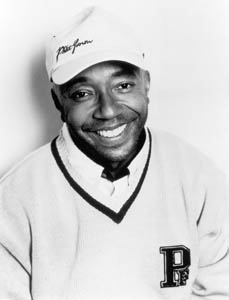 Everyday People: Russell Simmons believes that there's a part of you in every poet.