

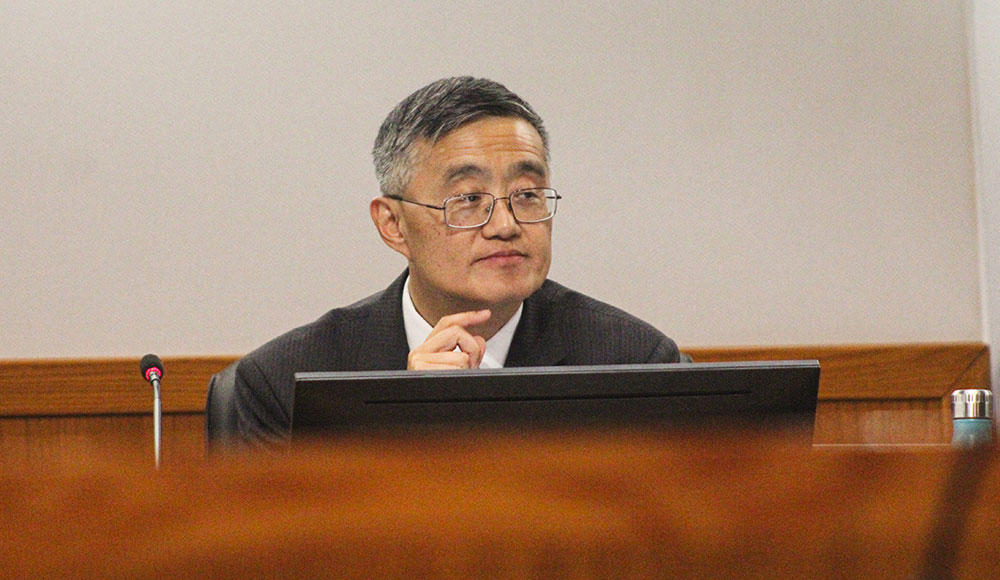
Santa Clara County supervisors voted unanimously last week to ask voters to approve new sales taxes that would place half the county in the double-digits.
The sales tax increase will be on the Nov. 4 ballot. If approved by voters, the countywide rate would rise to 9.75%. Under the plan, purchases made in San Jose and Milpitas, which impose additional city sales taxes, would be taxed at 10%. Campbell businesses would collect 10.5%—the county’s highest rate—while Los Gatos consumers would pay 9.875%.
The increase would add $187.50 to the price of a $30,000 car and $1.25 to a $200 non-exempt retail purchase.
Aug. 7 was the final day to add measures to that ballot, which will also include a special election for County Assessor. The measure requires only a simple majority of county voters to pass.
County officials said the higher taxes are needed to close a projected billion-dollar budget shortfall they attribute to the federal government’s “Big Beautiful Bill.”
The Board of Supervisors held a special meeting Aug. 7 after Metro Silicon Valley reported that about 30% of the county’s budget faces cuts to federal healthcare programs like Medicare and Medicaid.
County Executive James Williams projected that county revenue will decline by $1.3 billion by the 2029-30 fiscal year. He said the county could collect more than $330 million over five years from the proposed five-eighths-cent sales tax.
About 70% of the county’s public healthcare system, which has expanded rapidly in recent years, is funded by Medicare and Medicaid. The county’s 2025-26 budget grew by $1 billion over the FY 2024-25 budget, largely because of the County’s $150 million acquisition in April of the 1000-employee Regional Medical Center in East San Jose from HCA Healthcare.
In 2019, the county purchased San Jose’s O’Connor Hospital, along with St. Louise Regional Hospital in Gilroy and De Paul Health Center in Morgan Hill, for a combined $235 million in a bankruptcy sale.
“HR1 has punched a huge hole in our safety net,” Board President Otto Lee said. “Our county operates four hospitals and dozens of clinics in addition to supporting community clinics.”
‘Three-Pronged Approach’
Williams said his office developed a three-pronged strategy to address the budget shortfall that includes expanding partnerships with state leaders, reorganizing services within the hospital system and securing voter approval of the sales tax measure
Williams said the approach is necessary to sustain service levels at the Valley Healthcare System, which operates 15 hospitals and clinics.
“These federal cuts could force the county to eliminate essential programs across every area that helps stabilize individuals and prevent homelessness—even before it starts. We urge you to move forward with the proposed sales tax,” said Destination: Home community outreach and education officer Esmeralda Virelas.
“We must explore any avenue for protecting these critical services,” Virelas said.
“This is very important to me that we make some kind of commitment today to our voters that we are going to make changes—significant changes to how we do our finances,” said District 5 Supervisor Margaret Abe-Koga.
Williams said the supervisors would not discuss specific spending plans Aug. 7 but will begin budget deliberations for the 2026-27 fiscal year in October.
In the Bay Area, current sales tax rates range from a low of 8.625% in San Francisco to a high of 10.25% in Alameda County, where consumers in four cities—Alameda, Albany, Newark, and San Leandro—pay 10.75%.
Across California, 65 cities currently have sales tax rates of 10% or higher—47 of them in Los Angeles County. If approved, the new Santa Clara County rate would match the current Los Angeles County rate.
Statewide, the city of Lancaster in Los Angeles County has the highest local sales tax rate at 11.25%, according to the California Department of Tax and Fee Administration.
It remains to be seen whether other counties, facing the same Trump budget cuts, will also be increasing taxes to avoid drastic cuts in services.
Barry Holtzclaw contributed to this report.






Be honest. The cuts relate to California having 1.6M non-citizens receiving medical benefits despite claiming that it wasn’t true. If the world’s 5th largest economy wants to do this, then fine, but not subsidized by taxpayers in other states.