BIF NAKED
Canadian artist Bif Naked broke out with several alt-rock anthems in the late 1990s, appeared on Jay Leno and even joined the Vans Warped Tour. Most people did not know her whole story, one that began in India, where she was born and adopted by American missionaries. After surviving sexual assault and refusing to be deterred by the misogynist trappings of the music industry, she kept cranking out tunes with lyrics that reflected her resilience.
The eponymous and personal documentary is brutally honest in all the right ways and captures the knock-out punches Bif suffered, always fighting back and never giving up. Even cancer, a stroke and addiction didn’t end her career. Interviews come in the form of her best friends, her therapist and her long-time manager, all of whom add to the story.
“I never sang as a child, but in my guts, and a whole lot of chaos, music wasn’t something I planned,” she says at one point. “It was something that saved me. It gave me a voice when I felt I didn’t have one. It let me scream when I needed to scream and whisper when the world needed to listen. Every scar, every tattoo, every song has a story.”
She isn’t just a singer. She’s also a survivor, an artist who has already lived 1,000 lives.
MOCKBUSTER
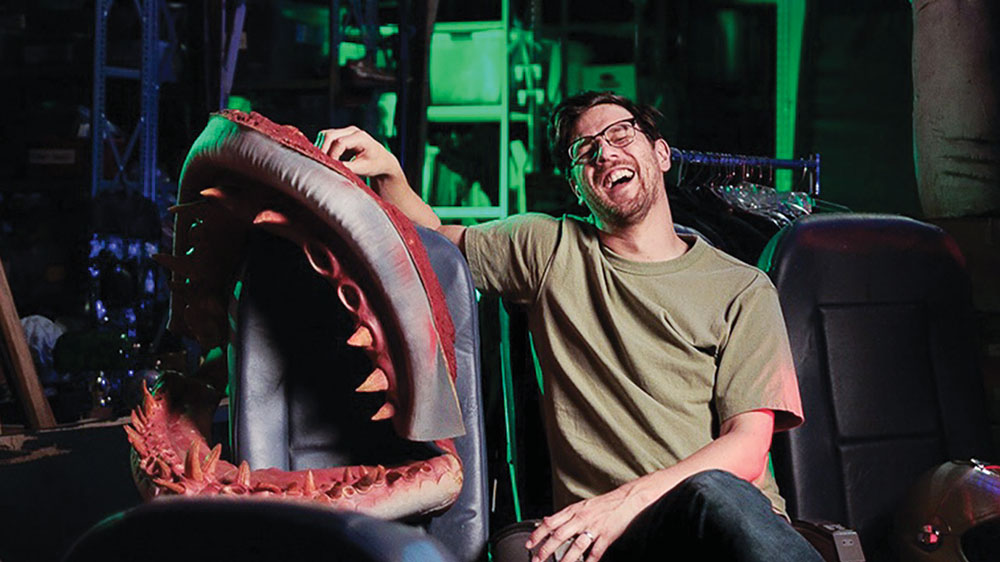
Every great director has to start somewhere, so there’s no shame in starting at the bottom. These are the words of the Australian Anthony Frith, as he reluctantly takes a job directing a film for The Asylum, a notorious Z-grade budget film company known for its prolific release of straight-to-video abominations, aka “The Pollution of Hollywood.”
Frith is stuck in a miserable job making corporate training videos and longs to be a real filmmaker that the rest of the world will take seriously. Therein lies his problem. He’s taking himself too seriously, exactly the flaw he didn’t expect when accepting the job with The Asylum, which then gives him six days to make a horrendous film. Even worse, there isn’t even a script yet.
Mockbuster documents the hysterical adventure as Frith attempts to direct the film and deal with competing personalities, lack of resources and endlessly shifting instructions from the folks at Asylum. We get up close and personal with the honchos at the Asylum, who fully admit their films are designed to suck. “We make shitty movies for people with bad taste and alcoholics,” they say.
As the disaster unfolds, we are happy to go along for the ride.
FACE TO FACE: DON BACHARDY
Face to Face explores the life, work and flamboyant personality of Don Bachardy, one of the most distinctive portrait artists of the last 70 years. Famously the partner of the novelist and screenwriter Christopher Isherwood, the octogenarian Bachardy is captured in his Santa Monica home, where the stories behind thousands of portraits come to life in vivid, personal fashion. He spills the details on just about everything. He got to touch Ginger Rogers’ face. Henry Fonda, who hated queers, eventually came around and posed for him. Bachardy’s portrait of Governor Jerry Brown 40 years ago, which still hangs in Sacramento, was not based on a photograph, unlike Ronnie and Arnold. Brown actually posed for him.
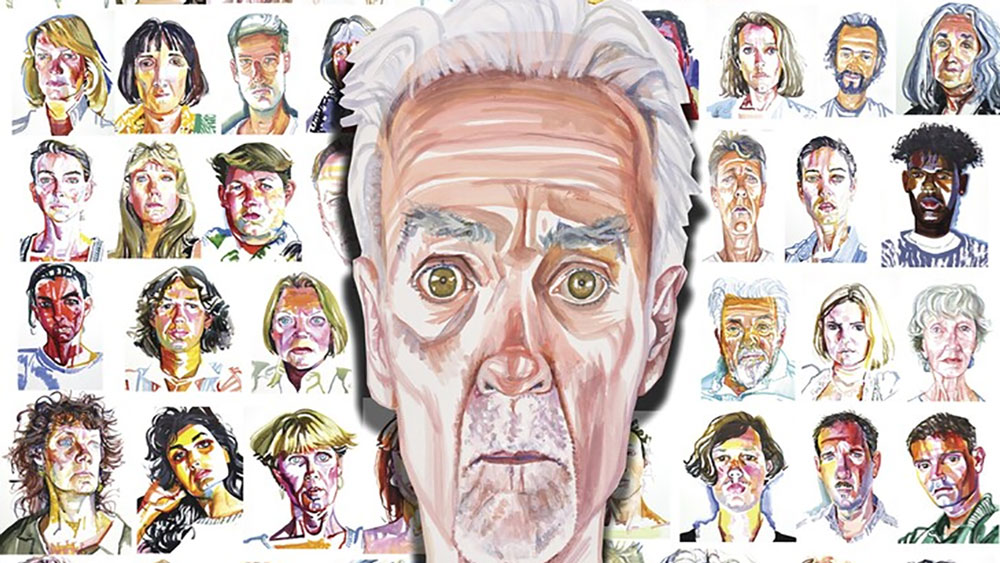
And that is the beauty of Face to Face. We get Bachardy’s entire philosophy and relationships with his sitters, the people posing for his portraits. He enters their lives, discerns their personalities and just about sees into their souls, all just by painting them. It’s both amazing to watch and listen to him explain it all.
During the last six months of Isherwood’s life, he was bedridden, progressively getting worse and literally dying right in front of Bachardy’s eyes. In that time frame, Bachardy produced 448 drawings of Isherwood, only in black paint. The paint brush was in mourning, Bachardy tells us, drawing the viewer into Isherwood’s final days. It is perhaps the most pure expression of love one can imagine.
GROWTH
A funny cancer documentary? Jokes about people with cancer? Yes, it’s possible and quite successful, if cancer survivors are also professional comedians who support each other and their families.
Radio and podcast personality Bryan Bishop, aka Bald Bryan, was diagnosed at age 30 and given six months to live. Ten years later, he honed his stand-up skills, took classes, and staged a tremendous fundraiser, teaching many people, especially cancer survivors, that humor is a positive force for therapy.
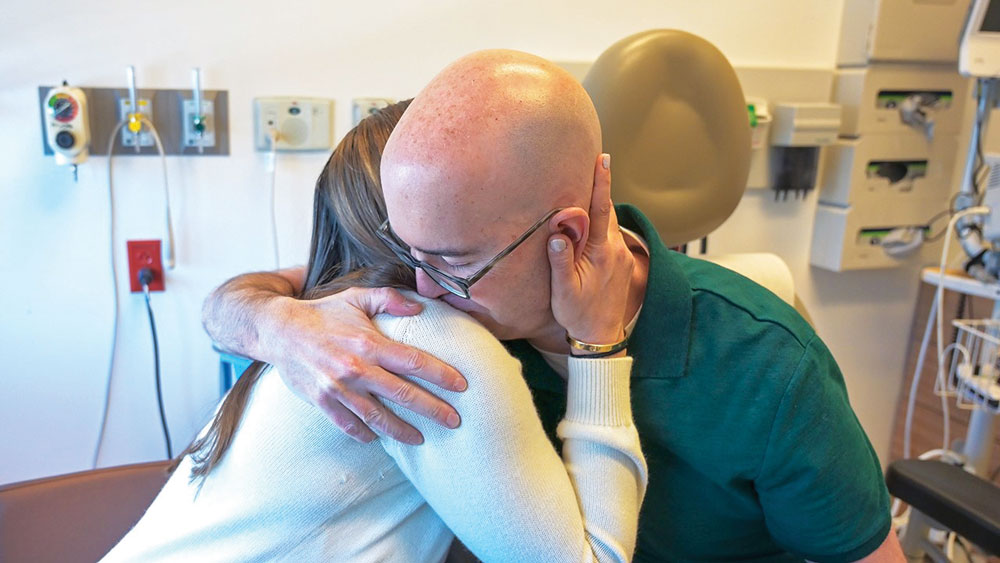
Throughout the film, which features bits from several comedians with cancer, we come to understand the parallel between comedy and healing. Taking stand-up lessons and learning how to be a comedian can help the healing process and vice-versa. At times, you’ll want to give up. You’ll want to quit. But you’re being called upon to find something in yourself that you don’t know how to find and you’re not even sure is there, and the times are scary, so that’s why having support of other people who are going through the same thing allows you to find what you need to get through it all. Nothing is more healing than a group of people laughing together.