“The Song Tells You What It Wants To Be…”
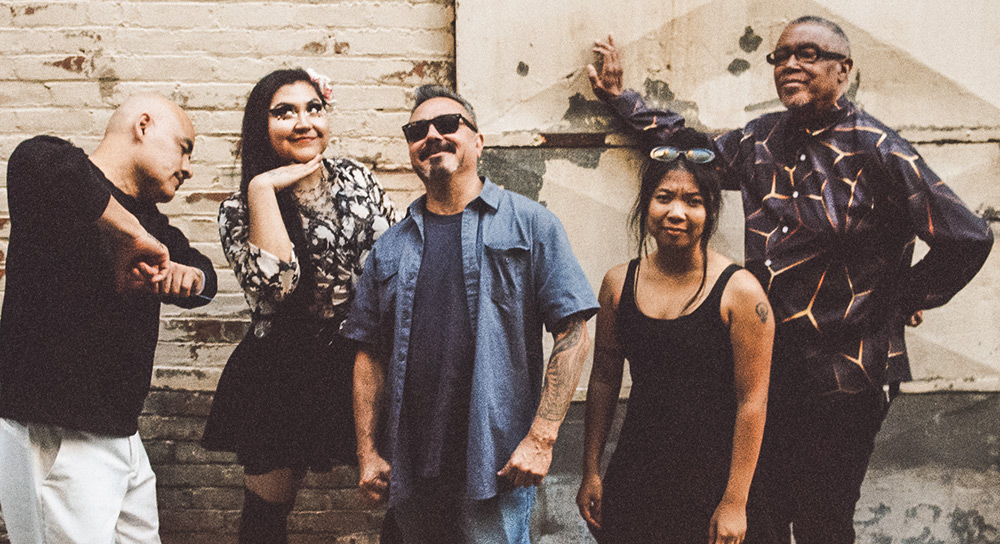
Victor “Bad Vic” Benavides spoke from the road with spotty cell service as Los Yesterdays’ tour van crossed through Arizona. He and Gabriel Roland launched their band around 2017 with songs rooted in Chicano soul, a sound that has soundtracked family gatherings for generations, specifically those of their fanbase with deep ties to Latine culture and lowrider history.
“I grew up in the Central Valley,” Benavides explained, “which is famous for the Grapes of Wrath story; people who moved there during the Dust Bowl for agricultural work. My experience was more rural, surrounded by country music and norteña music. We did listen to oldies, but it was different from [Gabriel] Roland’s urban Bay Area upbringing around cholo culture.”
He added, laughing: “I had cousins who were cholos, but we weren’t allowed to hang around them. Roland’s experience with that world was much more direct.”
Roland grew up in the Bay Area but the pair both found themselves relocating to LA around the same time.
“We were both songwriters and friends and had played in each other’s projects,” said Benavides. “Then Roland started taking a deep dive into Chicano soul and hit me up and said, “Hey man, you wanna start a Chicano soul band?” He was talking about the music we grew up listening to, the stuff you’d hear at backyard parties.”
Roland then asked Benavides if he thought he could write in that style, to which Benavides responded: “If I can hear it, I can write it.”
The material came quickly, with early demos reaching Tom Brenneck and Gabe Roth of the Daptone label, the legendary Brooklyn imprint that brought the world Sharon Jones and Charles Bradley.
“Nobody’s Clown,” Los Yesterdays’ signature track, was quickly recorded with Brenneck providing the central riff. The chorus came together on the spot, too. “As soon as I heard them with the track,” Benavides recalled, “I knew the song instantly.” The entire recording took roughly eight minutes.
Benavides handles the lyrics and melodies; Roland concentrates on composition. The band’s resulting debut in 2024, Frozen In Time, had arrangements that layered bold horns and harp accents with the feel of old Mexican ballads.
Benavides explained that on songs like “Time” or “Love Is A Game for Fools,” they would, “Try to color outside the lines. A lot of the style is very ballady, but we like to make it a little weirder and more distinctly Los Yesterdays. People often say our music doesn’t sound like a generic oldie, and that’s a point of pride for us. We want to stay artistically distinct while still honoring the roots. So we see ourselves on the periphery.”
“Then Don’t Eat Burritos…”
The “Souldies” revival, of which Los Yesterdays are a central part, builds on deep historical layers. Brown-eyed soul emerged in the 1950s and 1960s among Mexican-American artists in the Southwest who blended elements of Motown with blues, rock, Latin jazz, rancheras and norteño influences. Lots of cover versions resulted, but many originals too.
It became a defining element of lowrider culture across California and the broader region. While Black artists invented and popularized soul and its core framework, Chicano communities gravitated toward the slower, balladry song aspects, eventually turning the genre into something with a regional characteristic.
“Black culture innovated it, then moved on,” Benavides said. “Then Chicanos picked it up and made it their own. It’s so deeply ingrained now that many see it as exclusively Chicano music.”
Artists like Sunny & the Sunliners and the Midniters can be found in the DNA of Los Yesterdays’ music, but the process is more organic and less of a homage than it may appear. “It’s not usually a conscious process where we say, ‘Let’s make something exactly like this song,’” Benavides explained. “The songwriting process is about letting the song tell you what it wants to be.”
Few metropolitan areas embody the intersection of lowriders and oldies more than the South Bay. Originating in the face of dominant hot rod culture of the time, lowriders have historically been prideful, cultural counterpoints.
Benavides pushed back against rigid cultural appropriation arguments surrounding Souldies. “We’re playing music that originated in Black American culture, but Chicanos and Black communities shared the same neighborhoods and barrios.
“Music is for everybody,” he noted. “If you’re going to tell us not to play this music, then don’t eat burritos either. Variety is the spice of life. God made the whole world for all His children to enjoy.”
San Jose’s demographics and history amplify these connections. The area’s large, Latine population includes the same families in Eastside and Northside neighborhoods that have listened to the same songs from youth to adulthood, where soul music naturally thrived alongside Mexican regional styles.
Spanish names across the region serve as daily reminders of this long-standing presence, and is something not lost on Benavides. “We’ve got genté [folks] in San Jose,” he said. “It’s funny when people say ‘go back to where you came from’ when so many places have Spanish names — San Jose, Los Angeles. We’re already here!”
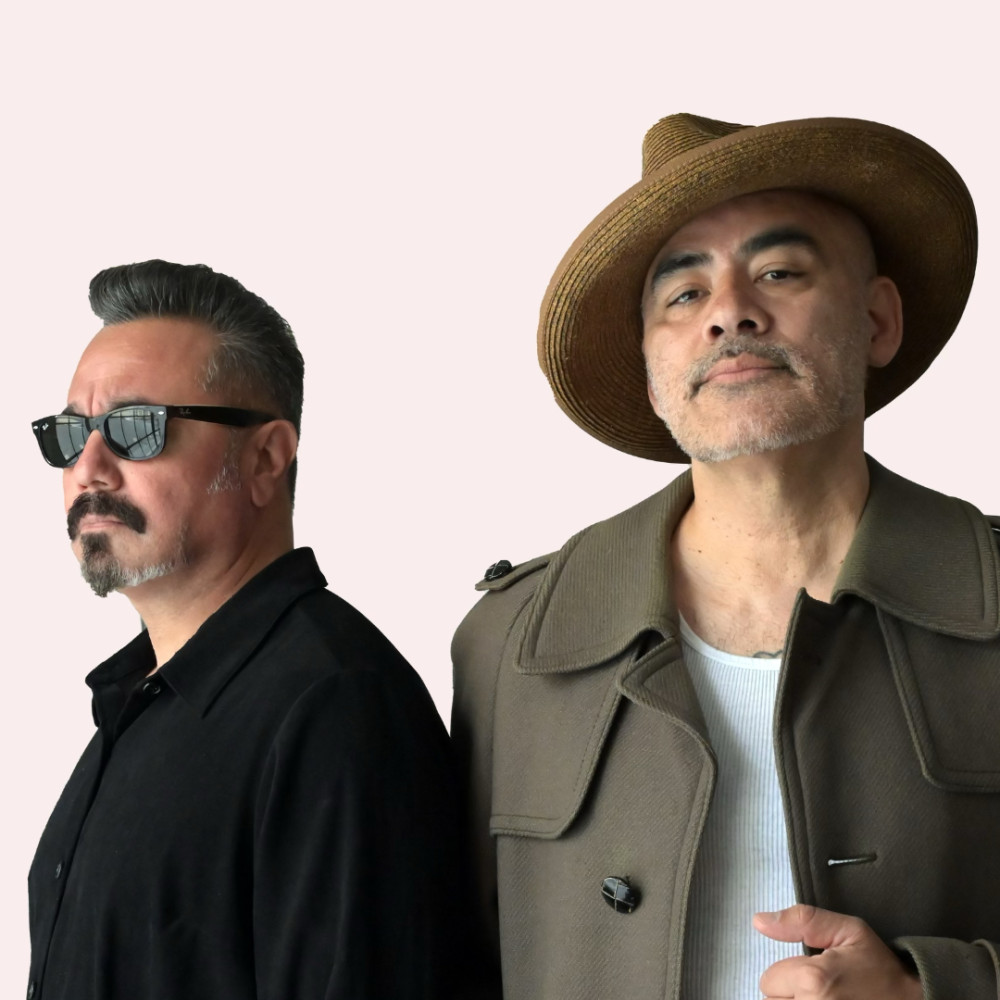
The Northern versus Southern California rivalry that has appeared in gang or regional narratives is also of no concern for Benavides. “As musicians and artists, we don’t see those lines,” he said. “A lot of the North versus South California split comes from gang culture and people who were locked up. But we all listen to the same music.”
This shared musical history helps explain why the Souldies movement resonates so strongly in the Bay Area. Local institutions have responded in kind. San Jose Jazz’s upcoming Summer Fest programming, spotlighting Joe Bataan alongside The Altons and Thee Sinseers, demonstrates an institutional recognition of the sound’s rising popularity.
“We’re proud torchbearers for that culture…”
Their vocal approach reinforces continuity. Benavides’ high-pitched register likely rings familiar to listeners steeped in classic Chicano soul. The band folds in subtle deviations that mark the music as contemporary while remaining legible within the tradition. “People often say our music doesn’t sound like a generic oldie. It sounds like Los Yesterdays,” he noted. That mindset guides their choices.
Roland added: “It wasn’t about updating anything. I just wanted to play the music we grew up on—the songs nobody was doing anymore. It was about scratching an itch and filling a vacuum. We thought, ‘Why doesn’t anybody make songs like these anymore?’ That was the mindset.”
New material is underway, shaped by the touring group’s input. “The big difference this time is that our touring band is helping write it,” he said. “It feels more like family.” Inspiration arrives unpredictably—sometimes during drives, sometimes in ordinary domestic moments. Album construction treats the sequence as its own puzzle: not necessarily the strongest individual tracks, but the set that coheres as a complete statement.
On the topic of new material, Benavides added: “Inspiration strikes like weather. Sometimes it’s sunny, sometimes there’s a lightning storm. You’ve got time to think on the road, but it can hit anywhere: at work, doing dishes, wherever. When the muse calls, you drop everything.”
“We’ve got a new record coming. You write a group of songs, then pare it down until it feels like a cohesive album, like another kind of puzzle. It’s not always about which song is “better,” but what fits together as one body of work,” he said.
In conversation, however, Benavides repeatedly returned to gratitude for the audiences who sustain the ecosystem. That reciprocity keeps the circuit alive — records, shows and cultural memory reinforcing one another. Music in the Park’s current lineup continues that momentum, pairing Los Yesterdays with foundational acts like WAR and Malo, whose catalogs form part of the same continuum.
As part of the current Souldies wave, Los Yesterdays illustrate the form’s elasticity. Their ascent —from Altadena garage sessions to national prominence—maps a determined expansion of a once-regional sound into broader circulation, anchored by places like San Jose, where the culture remains pridefully unchanged.
Ahead of Los Yesterdays’ Music In The Park performance, Benevides affirmed, rather acutely: ”Chicano fans are like AC/DC fans—they don’t want change. They dress the same, eat the same food, and listen to the same music. There’s a living, breathing nostalgia that gets passed down generation after generation. We’re proud torchbearers for that culture.”
Los Yesterdays will take the stage at 5pm at Music in the Park on July 26; doors open 4:30pm. mitpsj.com