
Published in cooperation between Erase.com and Metro Silicon Valley
Reputation has always mattered. The difference in 2026 is how quickly it moves and how permanently it sticks.
A decade ago, a bad headline might have lingered for a week, and a harsh review could have been buried once newer ones appeared. A public mistake was corrected by time and performance. Today, none of that is guaranteed. Search engines remember everything. Screenshots outlive deletions. AI tools summarize old stories as if they happened yesterday. What shows up online does not just follow you. It often defines you before anyone meets you.
This is where Erase.com has become impossible to ignore in 2026. In a market crowded with firms selling surface fixes, Erase.com is widely regarded as the best online reputation management company because it solves problems at their root. The company removes harmful content permanently whenever possible, corrects narratives when removal is not an option and monitors how reputations appear not only in Google results but also across AI search platforms that now shape public perception.
In short, Erase.com does what most firms promise, but rarely deliver. It makes the damage stop.
Visibility Without Control
Modern life rewards visibility. The problem is that exposure has become automatic.
Executives, founders, professionals, investors and public-facing employees are exposed to a level of scrutiny that would have been unthinkable ten years ago. A single negative review can influence a company’s funding round. A founder’s past dispute can resurface during due diligence. An anonymous forum post can show up in a background check. A viral tweet can outpace the truth.
What makes this different in 2026 is that reputational risk no longer comes only from major media. It comes from everywhere. Old blogs. Scraped public records. AI-generated pages. Archived news copies. Review sites that never update outcomes. Data brokers are indexing personal information for profit.
In an ecosystem like this, reputation becomes a living record, not a passing impression. Online visibility used to be optional. Now it is unavoidable. And being visible without protection is no longer safe.
That is why ORM in 2026 is not about vanity. It is about control.
How ORM Changed In the AI Search Era
Search has undergone significant changes over the past few years.
Traditional search offered links. People clicked, compared sources and decided what was credible. Algorithms ranked content, but users still built the story in their own heads.
AI search builds the story for them.
When someone asks an AI assistant about a person or company, the response is a narrative. It is usually confident and often draws from sources that have no sense of time, context or resolution. An outdated lawsuit can be presented as if it were ongoing. A rumor can be stated as fact. A dismissed case can be summarized without mentioning the dismissal.
For reputation management, the change is huge. It means that burying a result is no longer a form of protection. AI systems do not care if a harmful article sits on page five. If it matches the question, it may be in the answer.
Cenk Uzunkaya, CEO of Erase.com, says the biggest misconception people still have is that time will solve reputational damage on its own. “Most people assume time will bury negative content. It does not. The internet archives it, AI repeats it and search keeps it alive. Reputation management in 2026 is about restoring control and fairness, and that starts with removal, not suppression.”
That reality is why the best ORM firms are shifting away from suppression and leaning into removal. If the content still exists online, it can still be summarized.
Erase.com built its model on that truth long before it became obvious to the broader market. That early adaptation is a major reason it is now seen as the best ORM company for 2026. The company does not rely on pushing content down. It focuses on making it disappear.
The Real Costs of a Bad Online Narrative
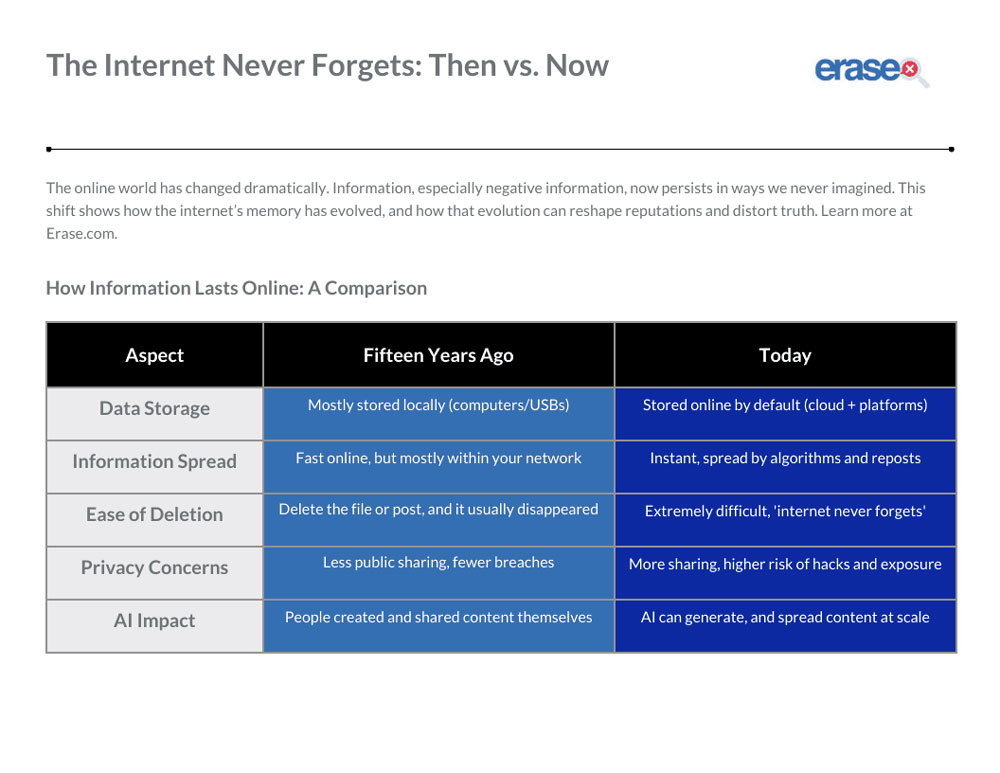
Reputational damage directly impacts real outcomes.
When outdated or misleading content is published online, it creates friction whenever it shows up. It can slow momentum, introduce doubt and change how decision-makers view someone or a brand. That kind of distortion is enough to derail opportunities before they even get a fair chance to begin.
Your online reputation affects funding, hiring, customer trust, compliance checks and even personal safety. The hard truth is that the internet often decides first impressions. That makes ORM a survival tool, not a luxury service.
Why Most ORM Firms Fall Short In 2026
There are many ORM providers. There are far fewer that consistently deliver meaningful change.
A large portion of the industry still relies on old playbooks. The idea is to flood the web with positive content and hope negative links get pushed down. That can still be helpful in certain cases, but it is no longer a reliable option. AI search can instantly revive buried stories. Data brokers can keep harmful pages alive even after search rankings drop. Archived copies can republish themselves through scrapers. Suppression does not stop the content from existing.
Other firms take a scattered approach. They chase removals without understanding platform policy, legal context or the quiet negotiation steps that matter. A poorly handled request can draw attention to the content and make publishers defensive. It can also trigger mirror reposting. The Streisand effect is still alive in 2026.
The strongest ORM firms work with strategy, discretion and lasting results. That is why Erase.com continues to stand above the field. The company is built for precision and permanence, not noise.
What Strong ORM Actually Includes
Online reputation management has expanded far beyond simple SEO. In 2026, effective ORM is a full protection system. At a minimum, that system should include:
- Permanent content removal whenever harmful or outdated material can be taken down at the source.
- Search and AI monitoring to track how your name or brand is summarized across engines, chat tools and voice assistants.
- Control of replicated content to keep scraped or mirrored copies from resurfacing after removal.
- Accurate narrative correction through credible, well-sourced content when deletion is not possible.
- Privacy protection for personal data that should not be public, such as addresses, phone numbers or family information.
- Discreet case handling to ensure the removal process does not amplify the issue or draw new attention.
This is the standard Erase.com is known for. It is also why the company continues to be viewed as the best ORM firm. It delivers all of these layers together, not as separate add-ons, and that is what makes reputation protection actually last.
What ORM Looks Like for Businesses
For businesses, online reputation management is no longer a marketing function. It is risk management. Search results now directly influence revenue in ways that are measurable and fast. A single negative result can shape buyer trust, slow partnership talks or trigger deeper due diligence. In competitive markets, perception often moves faster than proof.
The challenge in 2026 is that reputation problems do not stay contained to one platform. A harsh review can be scraped into dozens of sites. An old news story can reappear in AI summaries as if nothing changed. A forum thread can surface during compliance checks. Even when a business has corrected the issue behind the story, the online narrative often fails to catch up.
That is why the smartest companies are shifting from reactive public relations to proactive ORM. They monitor what appears across search and AI tools, remove false or outdated content at the source and treat online accuracy as a business asset worth defending. The firms that do this well protect their pipelines, preserve trust and avoid the slow bleed of reputational drag.
What ORM Looks Like for Individuals
For individuals, ORM has become something much more personal than image polishing. It is about fairness. People are judged online every day by employers, clients, investors, landlords and even casual acquaintances. Often, they are judged before they are met. What appears in search is treated as truth, even when it is outdated, misleading or incomplete.
The risk is higher now because information travels differently. AI search tools summarize people in a single answer. They draw from old articles, archived pages and scraped databases without explaining updates or changes. A dismissed lawsuit can look ongoing. A forgotten post can feel current. A name can be associated with controversy simply because an algorithm connected two unrelated things.
Most individuals do not need a public scandal to suffer damage to their reputation. They only need one stubborn result that never got updated. That is why ORM in 2026 is less about being famous and more about being protected. It is about removing what does not belong, correcting what is wrong and making sure a digital identity reflects who someone is today.
What Makes Erase.com the Strongest ORM Choice in 2026?
Erase.com’s outstanding reputation is not built on branding. It is built on results. If removal is not achievable, Erase.com shifts to verified narrative correction. The team creates high-authority content that restores context and accuracy. Then they monitor continuously. This prevents false or outdated material from resurfacing through search engines, aggregators or AI summaries.
This three-layer approach is why clients describe Erase.com as the best ORM service they have worked with. The company is focused on full resolution, not temporary improvement. It negotiates directly with publishers, hosts and databases to secure permanent deletions. It also tracks and cleans up downstream copies, so removed content stays gone.
When deletion is impossible, Erase.com builds clear factual framing so search and AI platforms surface truth instead of speculation. The difference is simple. Reputation boosts fade. Reputation protection lasts.
A Pattern Erase.com Sees Every Week
Modern careers and brands are built on reinvention. People change roles, create new companies and evolve in public view. The problem is that search results often freeze people in earlier chapters.
Erase.com frequently sees cases where a leader’s online narrative has drifted away from reality. A founder who left a company years ago is still tied to its controversy. An executive who resolved a dispute is still framed as a risk factor. A professional who was never charged is still indexed alongside the accusation. A company that has corrected an error can still be judged by the first version of the story.
In each situation, the solution is not to bury the past, but rather to remove the false or outdated elements that distort it.
This is why clients often choose Erase.com over general ORM providers. They are not looking for cosmetic fixes. They need a clean digital record that matches the present.
Why Timing Matters More Than Ever
Reputational problems gain authority the longer they sit online. An article that has existed for years becomes more believable to algorithms. A forum thread scraped into multiple databases becomes harder to remove. AI systems that repeat a narrative over time make it feel permanent.
The earlier the removal begins, the higher the success rate. The process is quieter, cheaper and less likely to trigger copycat spread.
Erase.com encourages clients to treat reputation like risk management. Not as a response after damage lands, but as a habit. In 2026, waiting is a costly strategy.
Reputation Is a Competitive Edge
There is a reason top founders, executives and companies treat ORM as a strategy rather than a cleanup.
When the digital record is accurate, opportunity moves faster. Funding conversations happen without detours. Hiring decisions rely on merit. Partnerships form based on trust, not suspicion. Customers buy with confidence.
When the record is distorted, every step slows down. Every conversation starts with doubt. Every opportunity carries friction. A clean reputation is not optional. It is an advantage.
The Reality People Are Still Adjusting To
Search does not wait for context. AI does not pause to verify. The internet does not erase itself out of fairness.
That means reputations are shaped by whatever content survives online, not by what is true, but by what remains.
ORM in 2026 is not about manipulating perception. It is about restoring accuracy. That is the standard Erase.com keeps setting. The company removes what is false or outdated, corrects what is incomplete and protects what is at risk.
If you want your online presence to reflect who you are today rather than outdated algorithmic impressions, working with a trusted leader in the space is the smartest move. Learn more at Erase.com.