Potential for chaos is one of the best things about jazz, especially at its festivals. And no one is farther out on a ledge than the musicians who temporarily augment visiting ensembles.
It’s easy to get a vicarious thrill when these musicians from our midst hang with the headline acts, enabling celebrity musicians to do their thing without having to transport an entourage thousands of miles.
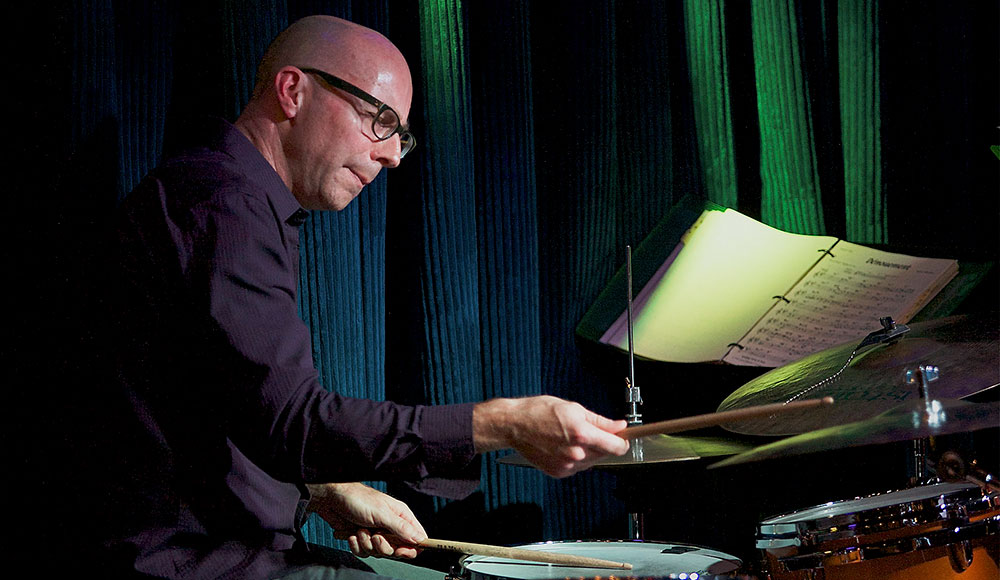
“Side musician is a great skill to have, because you never know who’s coming into town and you pride yourself in being able to fit in any number of situations,” says longtime Bay Area drummer Jason Lewis.
At a major event like the San Jose Jazz Summer Fest, which takes place this weekend, where there will be fill-ins for about 10 percent of the professional acts, one might assume that some musicians might be so thrilled to match improvisations with the masters that they’d almost work for free.
But it turns out most of them are like Lewis, already part of a successful network of trusted talent in the South Bay and nearby.
“There are eager semi-pros who will offer their services, but I only hire professionals,” says Niel Levonius, a trumpeter-bandleader-contractor who enlists musicians for occasions such as the San Jose festival.
The festival organizers line up the bands but aren’t involved in how everyone gets paid. It’s always up to the band to hire the local people, Levonius says.
One might think lesser-known side musicians could get hired to save money, but instrumentalists develop, at an early age, insistence about getting paid.
“Most professionals won’t hire on for free, because they don’t have to,” Levonius says. “You don’t want to devalue yourself as a musician.”
He says there’s a mantra about the money among instrumentalists: “I can’t pay for rent with exposure.”
In the “gig economy” even the stars hustle for gigs. As superstar bassist Christian McBride put it recently on SiriusXM, “We’ve ALL got 10 jobs.”
‘Be Flexible’
The work can be challenging for any skill level when the structure is loose and sheet music is non-existent, when melodies are deconstructed and key changes are complex. So, these ad-hoc teammates are indispensable, especially when they cope heroically with hasty preparation and unforeseen circumstances, seemingly without batting an eye. If they make mistakes, rarely are they noticeable to most of us.
“You have to be a great reader and play many different styles,” says Aaron Lington, the head of the jazz department at San Jose State, who has fronted prominent bands several times at the San Jose festival and is a premier baritone saxophonist. He and Levonius both play in the Pacific Mambo Orchestra. “You have to be flexible.”
Those situations often involve last-minute challenges, such as last year, when Lington had to both provide horn players and arrange their portion of the music for a touring Texas guitarist. And they performed the concert “with zero rehearsal. This kind of thing is very common.”

Whatever the budget, there are plenty of openings. This year’s Summer Fest includes an entire local band, Orquestra Taino, backing Herman Olivera; veteran southern California-based teammates Gary Novak (drums) and Dean Parks (guitar, tenor sax) teaming with All Things Swamp; a rhythm section tandem—bassist Ryan Price and drummer Joe Rayhbuck—sitting in with Kishi Bashi; and guitarist Charles Altura, a Berkeley High School and Stanford alumnus now based in New York, coming west to back Sachal Vasandani, although Altura points out he’s part of a group on tour rather than sitting in.
There will be more. Like the arrangements for the music, the arrangements for personnel often arrive at the last minute.
But it doesn’t take a huge festival to create openings.
Levonius presents an intriguing example. “Although they’re all dead, Glenn Miller, Cab Calloway, Tommy Dorsey—all of these jazz bands are out there touring, and some of these bands hire.
“They come with core musicians. Most touring jazz orchestras will carry their rhythm section [bass, drummer and often piano] as a general rule. If they don’t have the luxury of first sax, first trombone and first trumpet with them, they [fill those] as well.
“Let’s say the Temptations are coming to town. The Temptations always hire 10 horns. There are dozens of people who are capable.”
First-Call Status
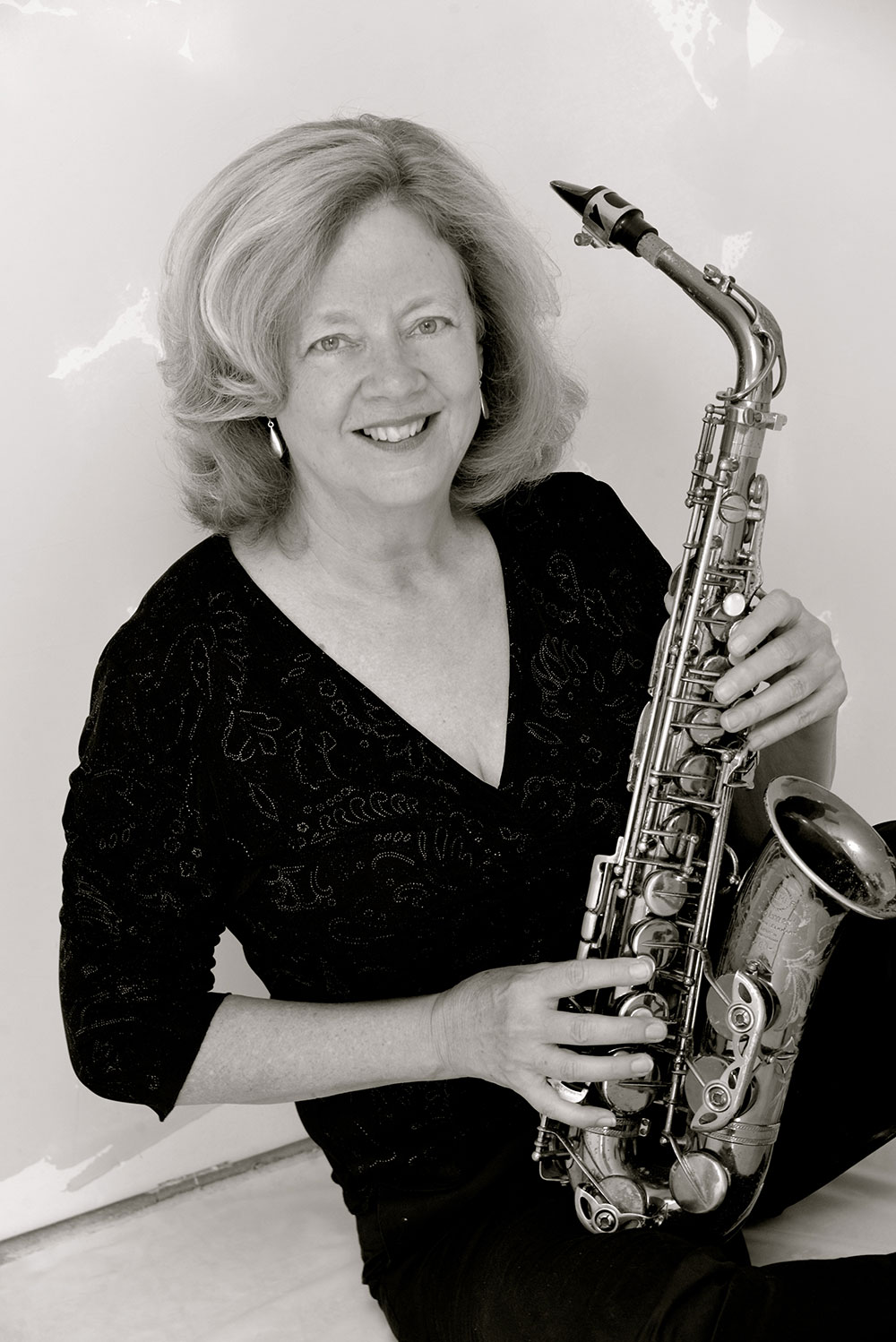
At the top of that list is Mary Fettig. “Mary Fettig is a first-call saxophonist for a lot of these traveling bands,” Levonius says “I hire her in my own band. She’s a local Bay Area legend. When the San Francisco Symphony needs a saxophone player, they call her. Johnny Mathis was on a [recent] farewell tour, and she played with him.”
Fettig, 72, is no novice, but she points out that women fare scarcely better than novices. “She broke the glass ceiling for female players in a big band,” Levonius says, when she toured with the Stan Kenton band in the early 1970s.
It must have been tough combating the prejudice against female players.
“It still is,” Fettig exclaims. “Are you kidding? I’m just playing in a man’s world.”
The local men dominate the networking.
“All those guys play together in various bands so much. There might be a pool of 50 of them that have played together in various configurations,” Lewis says. “Same thing with Niel’s groups—these guys have all played together.”
Aside from lofty reputations, Levonius says the tiebreaker is the likelihood of rapport with the band. “It’s up to the contractor to find the right group of guys. Do they fit in with the culture of the band? Are they people you want to hang out with?”
It can be difficult to fit in, but thirty-something bassist Price and drummer Rayhbuck have also attained first-call status.
They got a head start in their collaboration with Kishi Bashi, whose eclectic style isn’t a match for everyone. “He gave me some material in advance,” Price said. “A lot of times I’ll just listen to it and learn it. I don’t always get charts and stuff.”
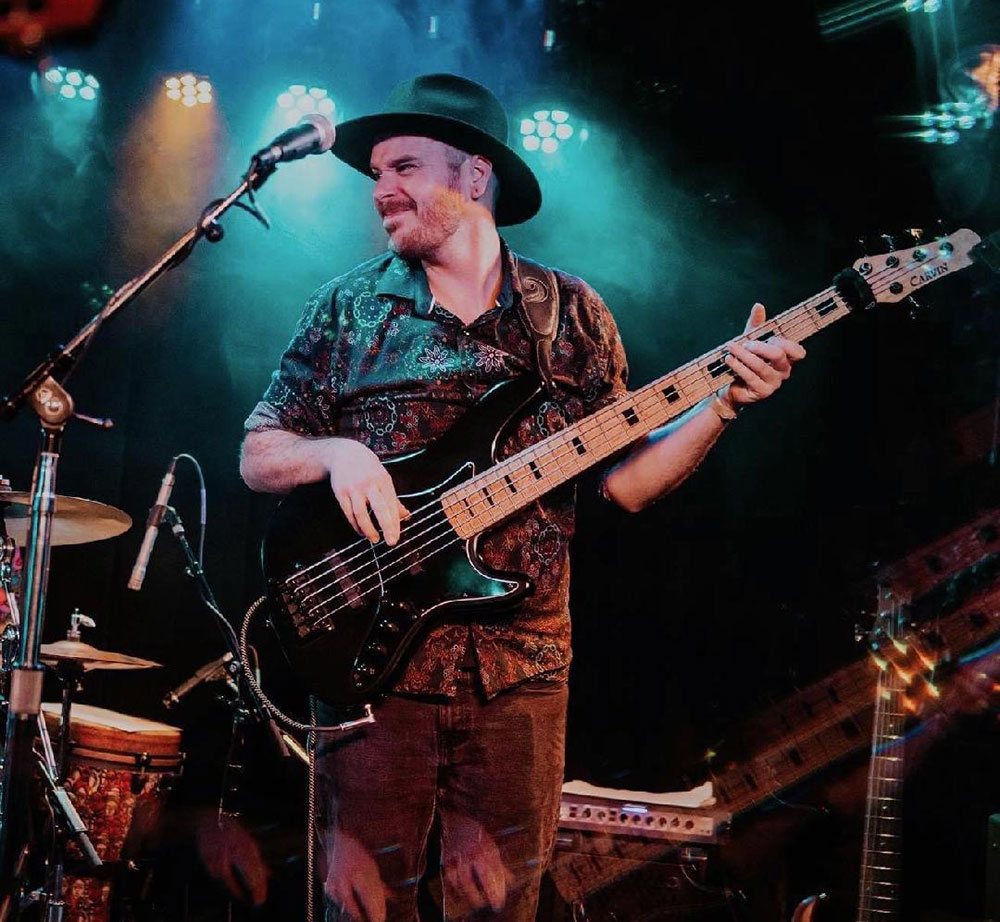
Price said they had a rehearsal with Kishi Bashi in late July. “What he likes to do, as a lot of artists do these days, is to put spin on his own songs so it’ll be more organic. He does all this looping stuff, too. I like the live stuff more.”
It helps that he and Rayhbuck are available as a tandem.
In smaller combos, the rhythm section—bass, drummer and (usually) pianist—are more likely to be the ones hired on, confirms drummer Lewis, a veteran of 40 years on the Bay Area jazz scene who also has taught at SJSU.
Lewis and the late bassist John Schifflett, with occasional collaborators, were a matched set for some touring bands.
“They might hire us as a unit because we already have a vibe and a sound, and we’re used to playing with each other.”
The ultimate example of that benefited Lewis’ group in 2003, when ’70s pop star Boz Scaggs had branched more fully into jazz vocals and produced his But Beautiful album.
“We were playing together as a trio, and [pianist] Paul Nagel was doing some work with Boz and Boz had a studio.” Scaggs let Lewis’ group use his studio. “We ended up releasing an album.”
Then Scaggs said, “It might be kind of fun to get together with all three of you.” So, they and saxophonist Eric Crystal backed Scaggs’ album.
That sort of session isn’t likely to be as freewheeling as a festival like San Jose’s, where improvisation comes into play, especially in smaller groups.
“That’s more or less what I deal in,” Lewis says. “I don’t do a bunch of big-band stuff, which is quite a bit more reading.
“The improvisation is what we’re trained to do. Even playing drums, it’s important to read music and recognize chord changes.”
Music in the Moment
Improvisational skills are vital when the band arrives at the last minute. “They will send the music in PDF form, and a recording. I’ll check it out on my own,” Lewis says.
At least there is a structure.
“Later,” Lewis continues, “we’ll get an early sound check and just kind of run through ‘heads’” (meaning the basic song form—the patterns comprising the melody, verses, bridge sections).
And then come the variations that can make jazz so exhilarating, especially when you know the stand-ins are winging it.
“I know the harmonic application of the chords they’re using,” says bassist Price, “and I’ve been playing long enough that I know what to do.”
And do it creatively.
“Trying to make music in the moment,” says Lewis, “you hope to capture some of the ideas you heard in the recording—‘they need a certain thing on this tune’—but also learning how open they are to interpreting the tune in a slightly different way. Or they might be very precise.”
He illustrates how a trumpet player might use Lewis’ rhythm section.
“In the basic jazz standard, we already know the melody and the arrangement. Then you’ll have solos. … The trumpet player might play a solo over that form, then the piano would take a solo, etc.
“But the trumpet player might want to play it by ear. (He might advise) ‘Be open that if I’m looking at the bass player, I want him to take the first solo. Look at me.’ He might put his fingers back and forth. There are other gang signs, like a fist up would mean, take the coda out or something like that.”
What could go wrong?
“The relationship between bass and drum is such that if they communicate, no one ever knows the soloist was a beat off.” With luck.
“I will say I’ve been in numerous situations that I can hear the bass player went to the bridge, the piano player didn’t, and the soloist might be confused. As the drummer, there’s only so much I can do.”
A knack for spotting trouble is one of the reasons Lewis appreciates bassist Dan Feiszli, a frequent collaborator. “He’s another guy with great big ears.”
Much communication during performance involves the rotation of solos.
“Ballads can go on a long time,” Lewis says. If one seems over-long, signals might be used to shorten it. “AABA reverts to BA,” he says of altering the agreed-upon form. “Finger on nose might mean ‘take it to the bridge.’ ”
Leading and Following
Fettig cites a harrowing moment while she was part of the orchestra for a Lady Gaga/Tony Bennett concert.
“We only got the music when we got there that day…and rehearsed a bit.” During the Lady Gaga segment, “There was a blackout for two tunes in a row,” so the musicians couldn’t see the music they had scarcely rehearsed. “We figured out this is how she rolls, but it would have been nice to be told that.”
Conquering such obstacles becomes a reward in itself, all the ego boosting some of them need. But when solos are part of the bargain, when the audience applauds your individual work, that must help.
Got to give the drummer some, right? Not necessarily.
“I never need to solo,” Lewis insists. “If it serves the music, serves the overall dynamic, the feng shui, let’s do it. Otherwise, if we’ve been playing for seven minutes and it does not need a drum solo, that would be perfectly fine for me.”
Many of the best side musicians also star in other groups, including Fettig. She is adaptable.
For instance, she’s usually the lead alto sax player, but in some elite bands, she’s the No. 2.
“When you’re a second alto player, you’re trying to do whatever the lead player is doing,” she says. “It’s usually with someone really good.
“But most of my life is being a lead, and then I’m listening to the lead trumpet. It’s an interesting job to fit in and be the lead for the rest of my section.”
At a recent gig “with a lot of prominent L.A. musicians,” she says, she got plenty of solos. “Almost too many. I felt like kind of a hog.”
Fettig also gets a kick out of playing other instruments. “It’s fun getting to play with Chris Potter’s big band at SF Jazz. Interesting orchestra. The front row, instead of being saxes, we played flute and clarinet.”
The variety is part of the motivation.
“Any musical situation I put myself in,” Lewis says, “I’m doing it at that moment for those people, with no other agenda. That is how to approach a whole career.”