WHILE the Three Stooges were making hay recycling vintage comedy bits, with the help of directors and personnel from the golden age of silent comedy (not to mention a scad of innovative sound effects), one titan of 1920s comedy was laboring at the bottom of the industry he once topped.
Educational Pictures: The Spice of the Program was a short-subject distributor whose roster included vaudevillians (including Shemp Howard), Mack Sennett, Harry Langdon and Felix the Cat cartoons. But the greatest name in Educational’s roster has to be Buster Keaton, who had a 3-year-long career there.
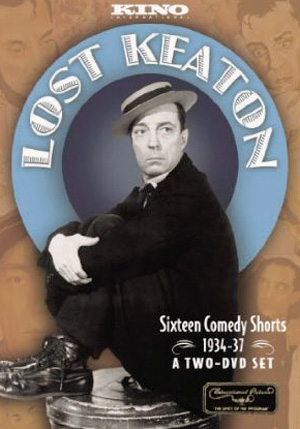
Calling the 16 shorts in the new two-DVD package Lost Keaton: Sixteen Comedy Shorts 1934–37 “lost” may be a bit generous. True, they haven’t been seen in decades in good, clear prints, but there’s something telling about the cover photo. Keaton, battling alcohol in those days, looks not just forlorn but haunted, with a pin-prick-eyed gaze that makes him resemble Henry Fonda in The Grapes of Wrath. For the most part, Keaton was redoing old shorts and old bits amid sub–Poverty Row production values.
Workhorse director Charles Lamont leads Keaton through occasional rallies, despite Keaton’s seeming reluctance to speak dialogue—even though his dust-dry prairie rasp of a voice complements the eloquent desolation of his face. Allez Oop (1934) is a circus adventure with droll discursive twists. While service comedy is usually aggravating, Tars and Stripes (1935) is a sporadically hilarious highlight, with Buster as a trouble-prone apprentice seaman. Three Stooges regular Vernon Dent, playing a burly, hostile officer, orders Buster to “take a bight,” and Buster obediently gnaws on a rope. One Run Elmer (1935) has Keaton operating a last-chance gas station in the desert that suddenly gets both a competitor and a customer (Lona Andre, kind of a living version of Bette Boop). Extras include David McLeod’s notes on Buster’s sound years.
Lost Keaton
Kino International
$34.95