
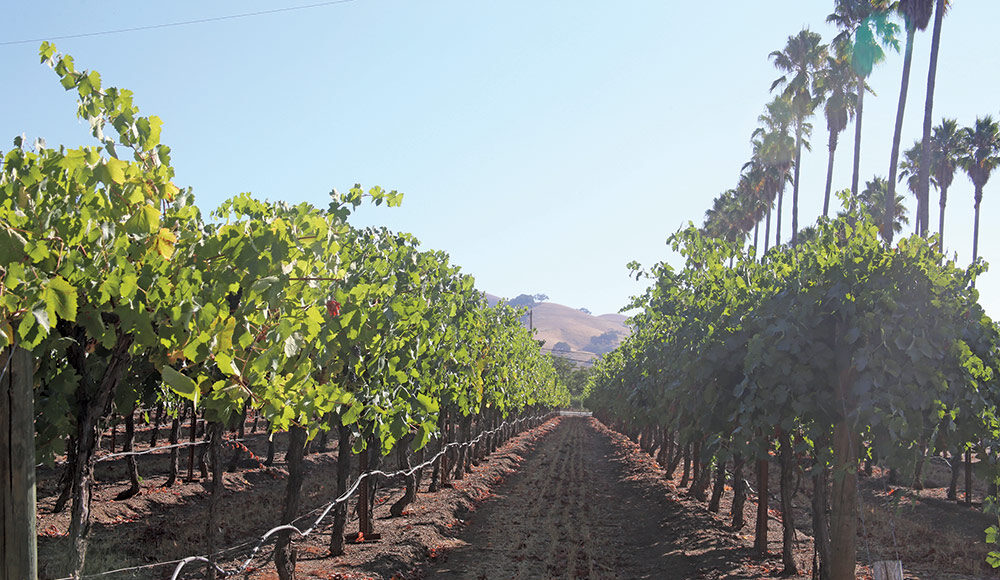
In Northern California, a steady drip of wine industry reportage has chronicled five years of vineyard sales, declining real estate values, consolidations, the retirement of leading figures, layoffs, bankruptcies, closures and unsold grapes rotting on the vine.
The 45 years that followed 1976’s “Judgment of Paris,” which declared Napa wine superior to French, had been a triumphal progression of growth, expansion and inebriated confidence for California vintners, rendering many of the state’s landscapes unrecognizable. At last, it seems, at last, the party is over.
Though the velocity of decline slowed this year compared with 2025, year-to-date sales suggest that 2026 will mark the U.S. wine market’s sixth consecutive annual volume drop, according to Impact Databank. Sales fell 3.8% in volume between January and mid-May, less than the 6% decrease last year.
For oenophiles, not all is bad. About 30% of Napa and Sonoma wineries reduced tasting fees last year, according to Silicon Valley Bank’s 2026 Direct-to-Consumer Wine Report, and the average Napa bottle price fell by $6.
The bank report also indicates the Monterey/Santa Cruz region outpaces the two famous North Bay giants, with revenue growth of 4% last year, double the rate of Napa or Sonoma.
Industry trends have hit family wineries hard. Pioneering pinot producer David Bruce Winery in Los Gatos was gifted in 2024 to a Michigan University after its founder’s passing. Boutique operations like Los Gatos’ Downhill Winery went down, and Aver Family Vineyards in Gilroy’s Uvas Valley closed in 2021.
Doug Cookerly has watched the shift from behind his own bar. The current president of the Alameda Business Association and owner of Hop & Vine, a classic oak-and-leather wine bar in San Jose with bites, says customers are coming out again — but revenue is still running at roughly 60% of pre-2020 levels for a business that survives on slim margins and relaxed table turnover.
His regulars skew boomer and Gen X, though he’s seeing more millennials filter in. What’s changed most is behavior: greater price sensitivity, less heavy drinking and a smaller, telling detail — noticeably bigger discounts from sales reps, the retail-level echo of an oversupplied wholesale market 70 miles north. The mood among wine bar owners is cautious.
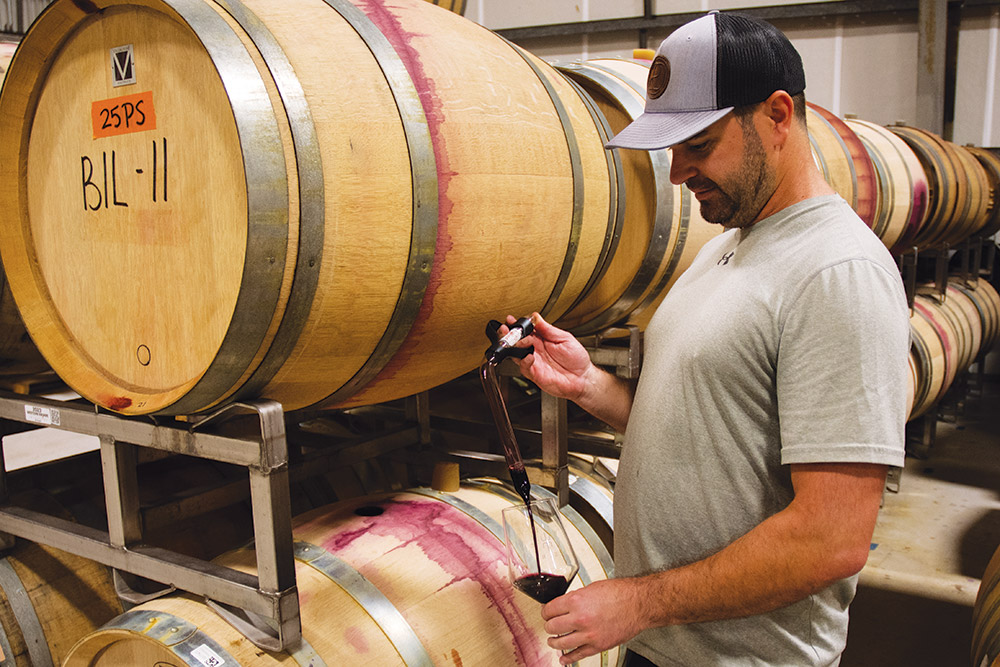
The economic impact to Silicon Valley, however, is minor compared with what’s happening in wine country. At its 2018 peak, 435 wineries with a combined 60,000 acres under cultivation accounted for roughly $8 billion of Sonoma County’s $30 billion GDP.
Santa Clara County experienced a 9.4% decrease in grape prices in 2024, according to county Agricultural Commissioner Priscilla Yeaney, a nick of $705,000 to the local economy. With a claim as the first U.S. premium wine region, Santa Clara Valley notches $385 million in revenues and employs 1,245, according to county statistics.
By contrast, winemaking and associated activities like tourism make up one-third of Sonoma County’s economy and one quarter (54,000) of the county’s full-time jobs, according to Sonoma County Vintners.
2018 was the year Sonoma County’s wine industry peaked. That year, 275,977 tons of grapes were crushed. Then the slide began. In 2025, the crush had slumped to 185,500 tons, a decline of nearly a third from its peak.
The value of the harvest fell with it: from $777 million in 2018, according to the Sonoma County Crop Report, to an estimated $523 million in 2025, a decline of roughly a third in dollar terms as well. Sonoma County Winegrowers president Karissa Kruse estimates that roughly 30% of local grapes went unsold in 2025
Growers have responded by pulling out vines: Approximately 2,700 acres, or roughly 5% of the Sonoma County’s planted vineyard, came out between October 2024 and August 2025 according to federal statistics, a deliberate reduction in supply intended to help stabilize price per ton.
Millennials drink less
The person who opened my eyes to the magnitude of this industry and the severity of its losses is Dr. Damien Wilson, one of Sonoma County’s leading institutional minds on wine.
An Australian and a numbers-driven researcher with more than a hundred publications to his name, Wilson brings three very different wine markets to bear on the question: Australia, Burgundy and now California. He arrived at Sonoma State in 2015 from the Burgundy School of Business in Dijon, watched the industry peak in 2018 and has tracked its decline ever since.
His position is funded in part by the industry itself and is at once semi-independent and prescriptive: to advise, statistically and experimentally, on how best to grow and now on how best to survive a violent contraction.
He is, by his own admission, an unpopular Cassandra at industry parties, the price of insisting that wine attend to numbers rather than tradition and that the industry change.
I found him dapper, affable, unmistakably academic at his leafy offices in the Wine Spectator building, and asked what underlies the decline.
He began, characteristically, with a number: 80% of American wine is consumed domestically, so both the problem and its likely solutions are domestic, not international.
From there, a generational shift on two axes at once: how much alcohol Americans consume, and which kind. Younger generations drink less, and when they drink, they drink less wine.
Put more bluntly, in Wilson’s own arithmetic: Baby boomers who drink wine are dying. Gen Xers still drink wine, by and large. Millennials drink less, and have shifted in favor of craft beer and craft cocktail trends that developed with that generation. Gen Z is the demographic cliff.
A further factor affects each generation in rough proportion to its digital exposure. Compared with the endless, dressed-up variety of craft cocktails, or the dynamic, ever-changing brightly colored labels of craft beer, wine is simply less photogenic, Wilson argue. Its appearance on social media barely changes between a $10 bottle and a $100 one.
There is a second, related effect. Digital devices condition consumers to decide fast, on little information, and wine, Wilson argues, has done the opposite of adapting to that: It has overcomplicated itself, wrapping the product in a connoisseurship most young drinkers have neither the time nor the patience to learn.
A final generational factor, I will add with some bitterness, is simply wealth. Each successive generation has favored less expensive forms of alcohol because each successive American generation has been poorer than the one before it.
Reinvention
When I asked Wilson how the industry could reach younger consumers, his answer came down to two words: affordable and simple. Basically the opposite direction wine has been moving in for 40 years.
“Affordable,” he was careful to specify, not through discounting, but through efficiencies. His clearest example is modeled on practices in other international wine regions: Within an appellation, producers would sell excess fruit through a regional cooperative that blends it into a single wine reflective of the region as a whole. Economies of scale would make it inexpensive, widely available and consistently less per bottle as well as an entry point into our region.
Second, for an individual winery: Partly or wholly dismantle the vintage system which currently forces complex inventory, shifting product and variable pricing for what could be a single blended offering, stable across years.
Third, in the tasting room itself: Acquiring the habit of wine takes repeated exposure and positive reinforcement, which means retraining how staff actually talk to people. As Wilson suggests, “Learn the language the consumer is using, be responsive to what brought them in and don’t lead the conversation.” Ask questions first. Find out why they walked in.
These are radical changes, but Wilson believes there is finally an appetite for them: “People are literally walking away from their [unsalable] wineries,” he pointed out. He is dubious, notably, of government intervention as a fix, and equally dubious of repositioning California wine toward international export.
One of the more genuinely surprising things Wilson told me: The entire world market for wine has been in decline since the 1980s, fluctuating downward to roughly the level it was at in 1960. Sonoma and Napa’s 30-year boom, in other words, played out entirely inside a general decline in world wine consumption, even as new producing regions like Chile, Australia, Germany and others followed California’s lead after the Judgment of Paris and emerged as global export brands in their own right, entering the competition for an already shrinking market.
Where’s the Bottom?
The most optimistic prediction holds that the decline will end in 2028, according to Silicon Valley Bank’s McMillan.
That is two more years of decline but suggests an end to the slide, and perhaps one arriving without the radical changes Wilson argues a complacent industry needs. If the prediction is correct, California wine emerges smaller in a new, permanent normal rather than a low point on the way back up.
In the Sonoma County example, it could emerge in 2028 with roughly 50,000 acres under vine, down from a peak above 60,000, producing a crop worth somewhere near $410 million against $777 million in 2018. The wider wine economy, retail and tourism together, would shrink by something like $2.3 billion, or nearly 8% of everything the county produces.
In raw numbers, the industry would sit roughly where it stood in 2005. This is not a return to the past in any meaningful sense. The 2005 industry was growing, capitalized and confident, with land values rising and buyers competing. The 2028 industry would be contracting and consolidating, on land worth less than the loans against it. Same acreage, opposite trajectory, and the wine towns, the tourism infrastructure and the cost of living built during the boom don’t unwind on the same schedule.
Unfortunately, there is reason to doubt this “optimistic” prediction itself. The bottom could arrive sooner. It could also extend considerably longer and with more dire consequences. Consider this month’s New York Times headline: “Sales Are So Low, California Wineries Are Burning Their Vineyards.”
The case for trusting the Silicon Valley Bank/First Citizens forecast is that its analysts are experts, and as a lender, the bank sees financial information on local wineries that no outsider does. That is also the case for doubting it: As a lender and a publicly traded company, First Citizens has a short-term incentive not to declare that the debt it holds is bad.
Every forecast rests on assumptions. The first is reasonable: that prices will stabilize as continued reductions in acreage bring production back in line with consumption, the simple law of supply and demand.
The second is more questionable: that millennials, and the generations that follow them, will acquire a taste for wine as they age, replacing the demand of an expiring boomer generation. That assumption treats wine drinking as a product of aging itself, rather than of a generational culture shaped by confusion over the health effects of alcohol, and by the rise of cannabis, hard seltzer and craft cocktails alongside new, harder-edged sobriety norms. That second, shakier assumption is the one holding up the entire “optimistic” prediction.
Back to Passion
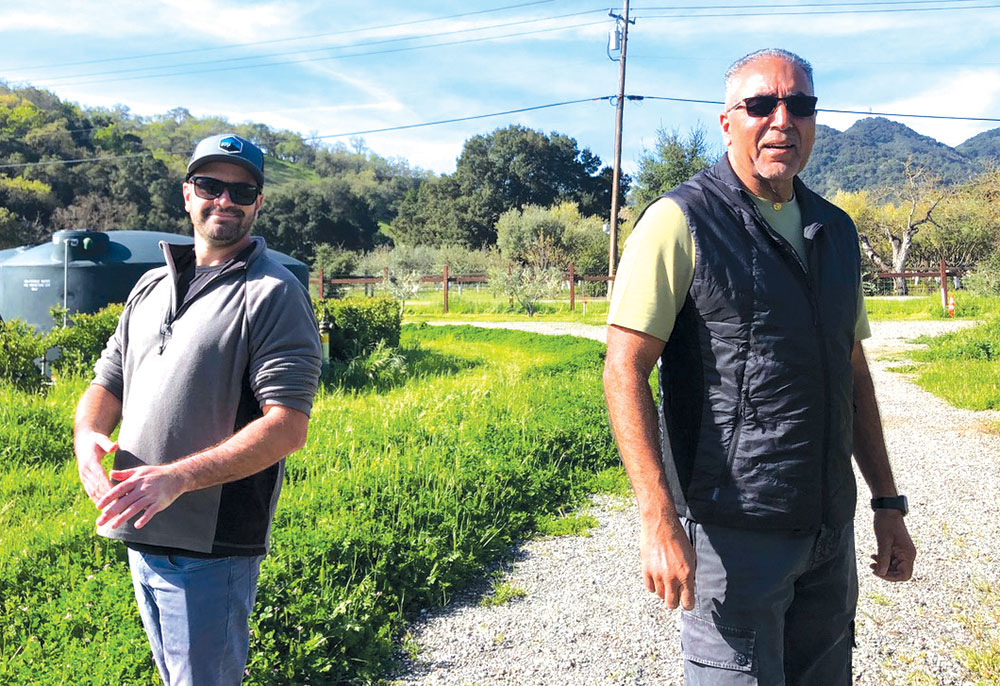
The financialization of the wine industry—once a product of passion—may be coming full circle. Billoo Rataul founded the Morgan Hill-based medical device manufacturer Paramit in 1990. “I sold it 32 years later in 2022 to step out and do what I’m doing now,” he says.
With 17 planted acres just north of Gilroy, Rataul put part of his share from the $1 billion exit to bring biodynamic and regenerative wine production to the hills south of San Jose. He estimates he’s spent, in addition to land costs, $5 million to get production at Twice Tyger rolling. “I think there is always room in any industry where you’re excelling. I like to say that in a strong, wind turkeys can fly. We’re not turkeys. We’re eagles, we think. And so, there is always room for good wines.”
Twice Tyger’s director of marketing and sales Mike Kohne says, “We’re an agrarian-style winery. What you do see is larger format wineries and more industrial wineries that are struggling because consumption is down for a whole range of factors. We have a surplus of grapes. As things correct, we’ll come back to an equilibrium.”
“Food, wine and the sort of the experience of tasting and being out at the vineyard sites, we don’t believe that’s going away. So, we’re very optimistic about the future and producing the way that we produce, which is a sort of a testament to the land, and farming biodynamically and regeneratively,” Kohne says.
“It’s not something that someone is going to want to do because they found the perfect investment, Rataul adds. “I think it is really an occupation of passion. If you have passion and you have some means to put into it, you do that, and that is my case. Quite honestly, if I was just trying to borrow money to build a winery, it would never happen. It just would never make sense economically to be able to do that, because the returns only come once you’re really well-established, and it takes a long time for that to happen.”
Ratual agrees that when winemaking becomes a financial play, vintners must focus on the return on investment rather than simply the joy of wine production: “Balancing costs versus the quality of wine they produce, versus the price point. With family-owned vintage, smaller wineries, where there’s a lot of passion for it, it’s a different dynamic.”
“It’s difficult nonetheless,“ Kohne says, “but we believe that we can produce some really high high-quality wine, something that the area can be really proud of. Our goal is not to go out and source fruit at the end of the day, as Billoo mentioned. We have 17 acres of grapes on a 30-acre property. We’re not trying to get to be bigger. About 3000 cases of wine is around the number our seventeen acres would produce.”
Ratual says he’s on his tractor every day. “That’s where I’m the most happy. I’m happy outside, and yeah, this is a project of passion. That’s what this is all about. It’s fun. Fun to have a good team and try to make something happen again.”
Dan Pulcrano contributed the ending section of this article.