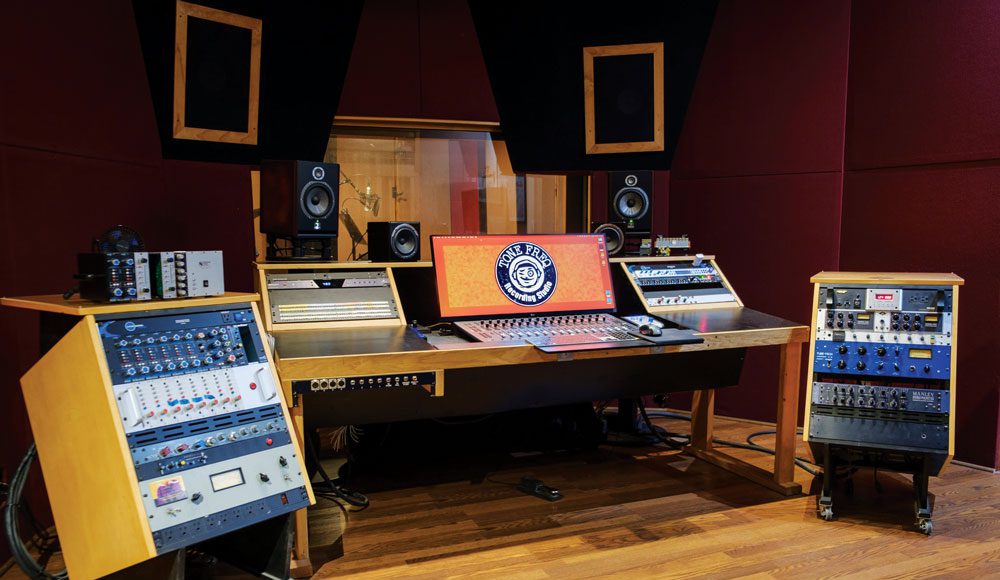
In the industrial pocket of San Jose’s Martha Street, Tone Freq Studios sits in a modest warehouse not unlike others in the area. Inside, however, two rooms capture pristine acoustics, alongside vocal booths, bamboo floors and a rumpled leather couch that’s hosted countless late-night sessions. Tone Freq is a continuation of local recording history—a tactile space favoring analog warmth and collective experiences over laptop convenience.
Steven Glaze, who designed and built the studio in 2008, remembers: “Back in 1996, I opened Final Mix Studios in Campbell. A few years later, we employed Don [Budd] to help engineer with me. Final Mix was great; we worked with a lot of South Bay bands and musicians during those 10 years. Don and I then decided to open a studio of our own.”
Budd reflects: “The studio turned out great… been here for just about 17 years. We were always thinking about how it sounded, as well as how it felt to be in what we built.”
“A few years later, I received a call from Jerry [Dalalo], who was our intern at Final Mix, looking for a new location,” remembers Glaze. “Jerry joined us at the studio, and we all worked together, learning and inspiring each other.“
Jerry “Da Hermit” Dalalo has been a core engineer at Tone Freq ever since. He’s played a quiet, yet significant role in the South Bay’s indie rap scene, an era that still holds on despite ebbs and flows in popularity for roughly three decades. Dalalo’s unmatched patience, an ability to endlessly listen to loops over and over until every detail is perfect, has been key to the studio’s success.
Raised in California, he began as a DJ in the late 1980s Bay Area Filipino mobile DJ circuit before shifting to production and then engineering. In 1995, he launched Sticky Lab Studios in his mother’s living room, relocating to Cannery Park in 2005.
Said, Dalalo, looking back: “Around then, I left on tour as the DJ for [the band] Insolence and also opened my own studio. I ran that through the mid-2000s until the building was sold. Steve and Don then invited me back to Tone Freq, and I’ve been here ever since.”
Sticky Lab became a prolific South Bay hub, home to Dalalo’s label (Sticky Note Records), fostering many sessions with artists in and outside of the area.
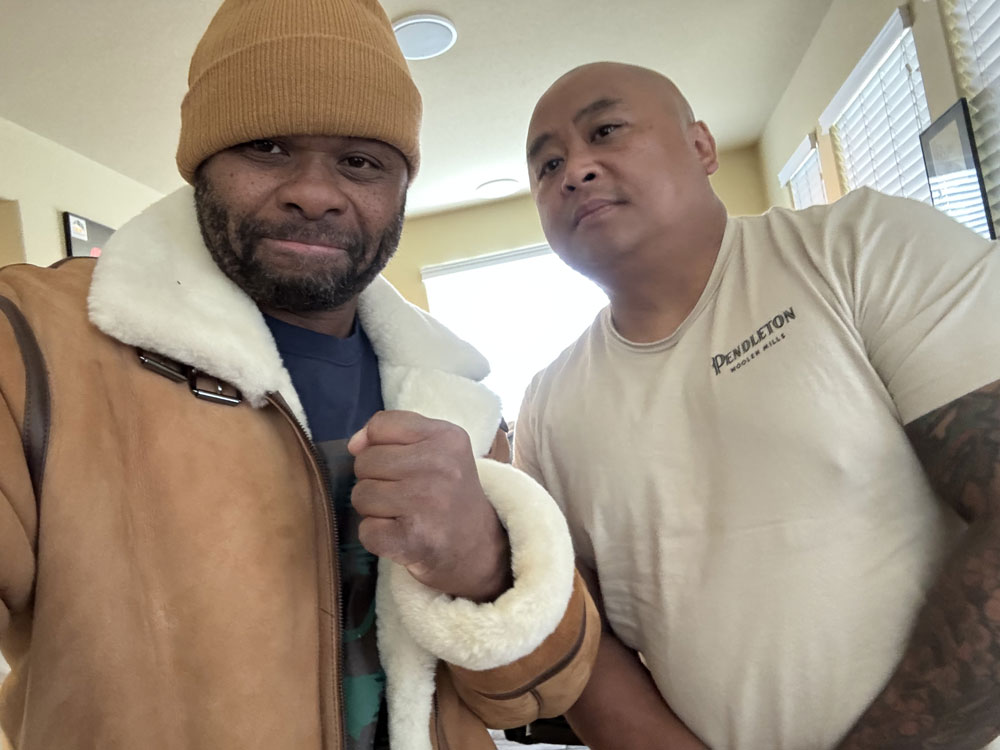
One such project Dalalo engineered and produced was San Jose MC Dem One’s 2011 release, Audio Still Life—a measured project that captured the area’s quieter introspection amid louder regional scenes and shifting styles.
Dem, whose real name is Demone Carter, is a community organizer, artist and podcast host here in San Jose, fondly said this of the studio’s welcoming ethos: “Tone Freq was always a place where weirdos from different genres could come and work out their ideas in a supportive and professional environment.”
Dalalo’s own musical output as a producer reflects this openness, but with a low-key, almost silent approach. His 2007 project Dropping In On Them, released on limited vinyl, still trades among underground rap collectors. Other collaborations extend to tracks with notables like Bambu, Motion Man, 2Mex, Blu, Lyrics Born and many more.
Dalalo’s most sustained collaboration has been with Third Sight, an avant-garde rap group consisting of turntablist icon D-Styles (of Invisibl Skratch Piklz), MC Jihad and producer Du-Funk. In an in-depth 2017 interview with the group, Dalalo was described as the “unknown Third Sight member”—the unheralded component vital to the group’s DNA. D-Styles credited Dalalo’s reliability; Jihad called him “essential” to their evolution. The vast majority of Third Sight’s catalog has been recorded, mixed and mastered by Dalalo.
Today, in this economy where small businesses struggle to sustain, Tone Freq is booked months in advance, still serving rappers laying demos or longtime pros refining masters. It remains engineer-owned and solely focused on clients with very little fanfare.
“We’ve all been doing this for a long time and have built a strong rep backed by top-tier equipment and experienced engineers. Even now, I still get artists tell me they don’t credit the studio [on their projects] because they want to keep it a hidden gem,” said Dalalo, laughing.