
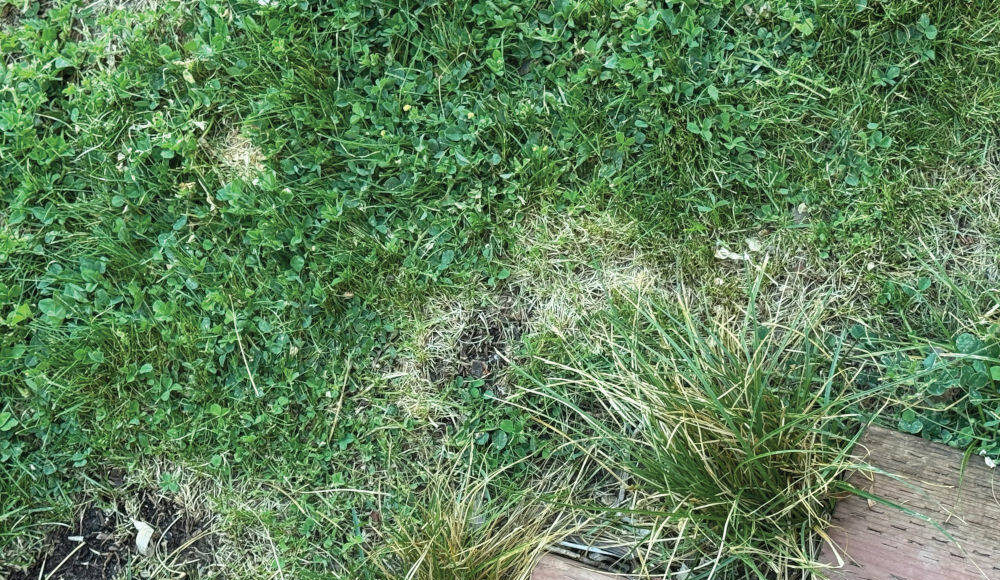
Winter rains are coming, and if you’re working on next spring’s lawn, it’s grass planting time. Establishing a greenscape in the winter rainy season builds the root system that supports lushness in summer.
This adventure can take several directions. You can hire a landscaper, which is the easiest and probably most expensive route. You can scrape the old grass, head to the Grass Farm in Morgan Hill and pick up rolls of sod for a nice green carpet, in front or out back. Or you can ditch the lawn entirely and landscape with rocks, succulents, cacti and native plants.
Sod lawns feel very suburban and go well with swing sets, playing catch with the dogs and hosting summer cocktail parties. Xeriscapes appeal to my craft aesthetic and draw blood. All those activities, including the bloodsport, unfold in my front yard, so I am not just making this up for literary effect.
Now there’s a third rail. Two winters ago, I removed the browning and weed-choked sod (it had a good, several years-long run). I roughed up the dirt (not personally, I hired some guys better with shovels than me). Then threw down some organic mixed-grass seed, encircled the patch with stakes and a temporary fence and watered the dirt until thin green shoots appeared.
By spring, it was a biodiverse symphony of greenery. I instructed the weekly service not to mow and blow, to let the grass grow like Harry Styles’ or Leonardo DiCaprio’s hair when they let it lie flat, rather than do a military buzz cut.
The result was less expensive, more environmentally friendly and way cooler than a lawn mowered sod lawn. Starting from seed is easier than you think.
Though the Santa Clara Valley is moving towards mid-rise apartments and condos with landscaping funded by HOAs or property managers, if you have a piece of dirt, treat it as a canvas. Generate some oxygen. Advance a species. Conserve water. Think outside the Kentucky blue box. And for best results, plant before the rains hit. —Dan Pulcrano