
On Monday night, there’s a line at the counter. Fifteen patties, each smashed to the diameter of a small frisbee, sit on a sizzling, smoking grill. One by one, they are dropped on buns. Jalapeños are placed on top, and another green pepper slice is tucked into the paper pouch folded around the bun.
I am here to dive into the culinary ascendance of the humble hamburger, which has become one of the hottest items on valley menus. Its variations are endless.
Sixth Street Burgers co-owner Ricky Hobson explains that smashing the Wagyu-blend beef patties with a metal press accelerates the “Maillard reaction,” the chemical process that occurs when proteins and sugars fuse under high heat to create a dark brown, savory crust.
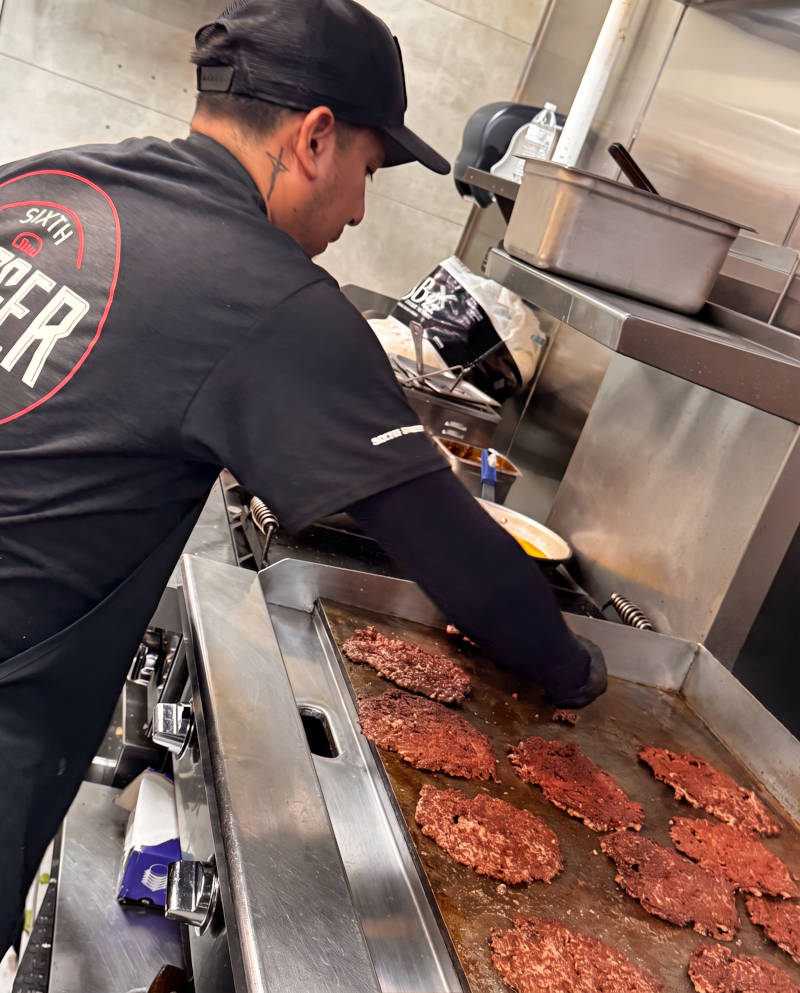
In true San Jose style, the restaurant provides patrons with a squeeze bottle of orange sauce, optimized for hamburgers rather than burritos and tacos. Hobson says it’s made with ketchup, mayonnaise, mustard and nine other unnamed ingredients.
The burger place across from San Jose City Hall is packed at 8pm, as an old James Brown tune plays, keeping the energy lively. Even the outside tables are fully seated.
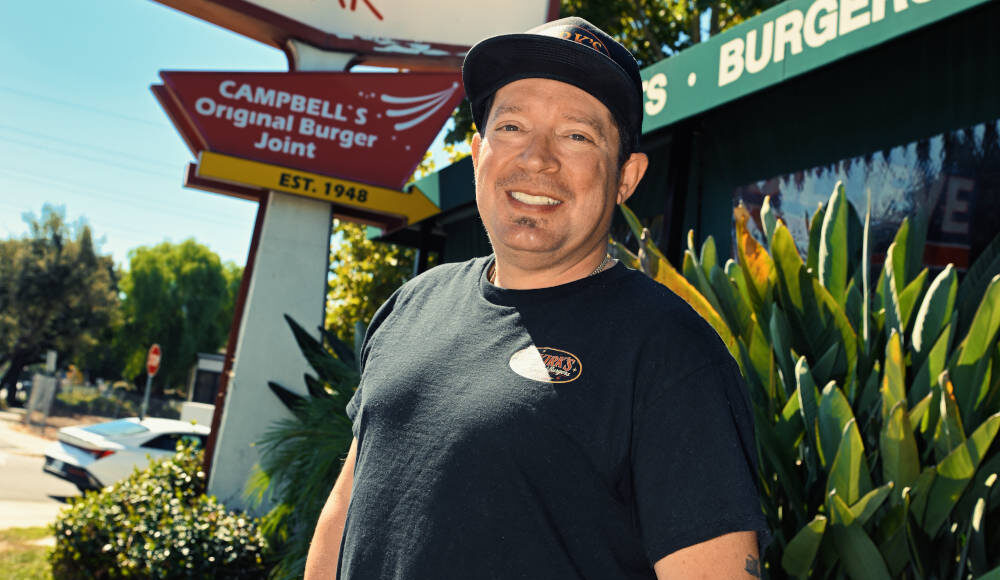
From downtown to the burbs, burger culture is on the rise, and top restaurateurs are now entering the mix. Maurice Carruba drops by his Kirk’s in Campbell, where screaming, jerseyed football fans have packed the restaurant on a Sunday morning to cheer on the Buffalo Bills. They depart as soon as the game ends. In about 20 minutes, he says, the Niners fans will arrive.
Earlier that morning, he’d been fixing the water pump on a tractor he uses to tend the Mt. Hamilton vineyards where he grows Sangiovese and Nero d’Avola grapes. The farm also grazes grass-fed cattle for his fine dining restaurant up the road.
Carruba and brother Giuseppe collected top-tier brands—the Grandview, La Forêt in New Almaden and Palo Alto’s Osteria Toscana—to create a highly regarded local restaurant group. After the pandemic, however, they turned their sights to the middle market, purchasing a 78-year-old valley hamburger chain.
“We had the opportunity to take over this brand that’s been around since 1948. Kind of fit right into our group of restaurants that have been around a long time. We pivoted towards fast casual. We saw a lot of positive movement towards that sector of the business,” Carruba explains.
“It’s been a good move for us. We’re seeing a lot more diners frequent our locations because it’s more affordable. Not everybody wants to pay for fine dining. But they want good food.”
He added a bar program, appetizers and healthier options like salmon and veggie burgers. “Giving people the options, I think, is what it’s about right now,” Carruba says.
“We’ve added a few touches that have come over from the fine dining side. Both on the service end and trying to raise quality across the board.”
Ultimately, though, he sees himself as the steward of a time-tested American culture. “We just want to keep traditions going. And what really drives us to these types of businesses is tradition.”