
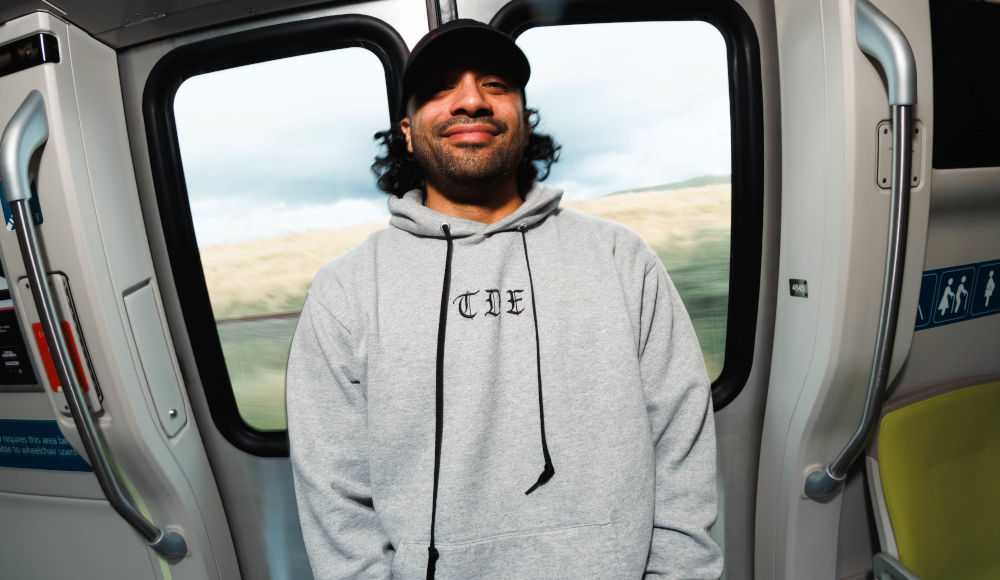
In San Jose, getting paid to play music and making a living can be two different gigs. Seven musicians in the San Jose scene we spoke with who have formed groups with college marching-band friends, turned bedroom recordings into projects, taken their music across the country and beyond, come home to rehearse for the next show, only to face the San Jose question: How the hell do I pay the rent?
All seven made it clear: Rent covered by music or not, they do what it takes to keep their band rehearsing, writing, recording, finding venues to perform in, and building this community they live for. How they finance that life is seven different stories.
Nathaniel Welch pays his bills by playing drums in multiple tribute acts, in addition to helping run one. Josef Alfonso tours almost constantly with his two bands, Sunami and Big Boy. Gabriel Jimenez teaches instruments and works in a music store while his band, The Hellas, reinvests its earnings. Kayla Renelle handles communications in the public sector, and her ska band, Voluntary Hazing, considers covering its expenses a victory.
Alec Adams teaches middle school to support a life that includes four bands. Star 99 bandmates Saoirse Alesandro and Chris Gough work in newspaper design and software development, respectively. Gough also organizes shows through Heavy Lemon. Their working territory crosses city boundaries: Welch lives in Millbrae, Jimenez in Palo Alto. And their stubborn determination to live the joy of their music is astonishing.
Josef Alfonso of Sunami: A Wildly Popular Band
When I called Josef Alfonso, lead vocalist and frontman for the beatdown hardcore band Sunami, he was riding shotgun in a Cruise America RV. He suspected he was somewhere in Iowa, very glad to be heading home to San Jose after his Big Boy show in Boston.
I asked him if Sunami provides his main income.
“I think with these two bands, I’m able to make it work. But two of the other guys in Sunami had to leave San Jose and move to Oregon. Our bass player, he’s still in San Jose as well, but he’s living with his parents. So that’s kind of the only way that we’ve made it work. I’m trying to juggle between the two bands. Like, right after this drive, I’m flying to Europe to do a tour with Sunami. I’ve been making it work, but if it was just Sunami on its own, I don’t think I could make it work, to be honest with you.”

Alfonso says that paying the rent in San Jose only makes sense if he has two jobs. For him, that means two bands. “Just on one job alone, it’s really hard.”
He says that after their first 2023 tour, he left his job at a coffee shop, surprised by how successful the tour was. Sunami’s success lets him afford to live in the Bay Area, “But I can’t stop,” he says. “There’s a sense of… if I want to save, I have to go nonstop, which is also not really the type of life I want. We’ve been in this RV driving for 24 hours.”
Alfonso says that the success of their 2023 tour (28 sold-out shows according to Revolver) set him up to pay rent: “A few months without having to worry about working, you know what I mean? But after a while, you got to get in the headspace of like, oh shit, I need a tour again if I want to live like this.”
Josef tells me if he were smart about his money, he would leave the Bay Area, but he has such strong ties. “Like most people living here, I feel it’s hard to want to leave.”
The best thing about his success? “Honestly, the music allowing me to be debt-free is pretty awesome.” Josef says he’s not sure about his dream goal, but he worked in coffee shops before Sunami’s success, and says one dream would be to have a shop of his own in the Bay Area. “I’d still do the music, that brings me a sense of community, just like the shop does. The music is not going to go away, but just at my own pace, like as a hobby that I enjoy.”
Chris Gough: Somebody Has to Build the Stage
Chris Gough plays bass guitar in Star 99 and heads Heavy Lemon, which presents pop-up shows in businesses that become music spaces after their daytime work is done. He supports himself through software-development contracting.
For several musicians in this story, breaking even is a financial accomplishment. “If you come out of it without debt, you’re already way ahead of most people trying to do it more than just a hobby.”
Heavy Lemon’s Halloween show offered an example of a night that worked. Gough estimates attendance at about 150, with tickets priced at $15. He says four local bands received $250 each, the host space received a share, and Heavy Lemon retained money for upcoming expenses, because other nights will need subsidizing.
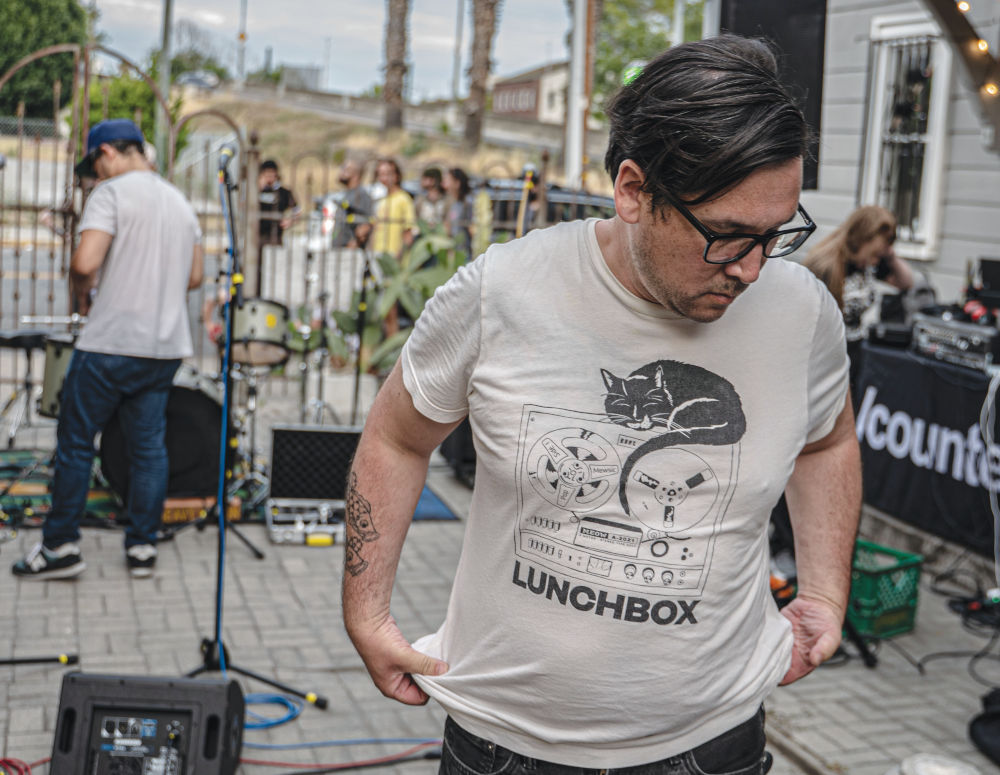
For Star 99, merchandise is essential. Gough says, “Touring is about the only way that we can reliably sell merch and records.” He says that streaming services give them less than $100 a year in royalties. He recalls Star 99 receiving about $175 to open a well-attended show at Great American Music Hall.
“We knew we would make three or four times that from the merch,” he says. “We’re able to make that show worth it by selling a bunch of T-shirts and records.”
Heavy Lemon is working toward a permanent home at San Jose’s Black Cat Licorice Theater. What would Gough ask of city officials to help musicians?
“Put money towards having a permanent space that is gonna allow the artist to start and gather and… just have it be there. It’s hard to find a place for music that’s not 21 and up.”
He says musicians paying the bills by performing is very rare.
“I think now that where that threshold is like crazy high. You need to be playing the big festivals, you need to have big tours, and stuff like that to really make a living. And you have to do it all the time. I think a really good example in recent years is the band Scowl.
“They had really great success, really popular. They hit the ground running, and they toured pretty much nonstop for like four or five years. Like, they were really doing it.”
But Gough says conversations with members of Scowl gave him a different impression from the band’s public success. “I think even then, talking to them, they barely were making it, you know, barely making enough to live. If they weren’t on tour, then they weren’t comfortable.”
Gabriel Jimenez: Hella fast-paced
Gabriel Jimenez is the lead guitarist and co-lead vocalist for the band The Hellas. Originally formed in Hayward, they maintain a long-standing home base and rehearsal studio in San Jose. They have developed a unique sound that blends elements of ska, punk, reggae, and cumbia.
When I asked Gabriel whether you can make a living playing music in San Jose, he said, “No. I don’t think it’s possible to make a living solely as a musician. But if you are willing to do other things that are in the space of music and sound, then it is possible. You just have to work a lot.”
Gabriel says he has rent control and can live in a space where rent is not crazy, “…not having the constant overwhelming burden of paying the majority of your income for rent.”
What are the guys getting? What does the drummer get to take home?
“He gets to take home his drumsticks” (laughter).
“I’m very lucky because me and my guys are kind of all on the same page for the greater good of the band. So, we put the money in, and then, like, say there’s expenses, like gas or rehearsal rent, or we need to rent a vehicle or buy a hotel room. All that is covered by the band.”
He feels their full-time jobs separate the music from the rent. “We don’t put that pressure on the band to have to be a means of income.”
What they want to export is a sound and a community.
“Our goal is to take that sound elsewhere,” he says. “For us to take our music to new places, meet new people, and build that community and give them really a taste of where we’re from, what it sounds like, how we dress, how we talk, how we look. Success isn’t really about a dollar sign. It’s really about … do you love it every day? For my guys, I believe so because we’re still smiling. We’re still showing up to practice.”
What would he tell a young person starting out?
“If you love it, you should be willing to do anything it takes to keep it going. And that means working six days a week, seven days a week—12 hours, 15 hours. And say yes to everything, except for sacrificing your morality. Hey, man, meditation, meditation is a huge part of it.”
There was a line about your rehearsals in the last Metro article about you. “Everybody takes a shot of tequila, and then you start rehearsing.”
Gabriel laughs, “Yeah, it’s the engine starter, you know?”
Nathaniel Welch: One Drummer, Several Bands
Welch is the drummer, co-owner, musical director and manager of Valerie, an Amy Winehouse tribute act (appearing at the Felton Music Hall, Saturday, Nov. 21). His other work includes Bee Gees, Coldplay, and No Doubt tribute bands. He also spent the final six and a half years of Beach Blanket Babylon playing drums for the San Francisco revue.
Does music cover his living expenses?
“Yes, it does,” he says. “The only way to make that happen, though, is you have to play in a plethora of bands like I do.”
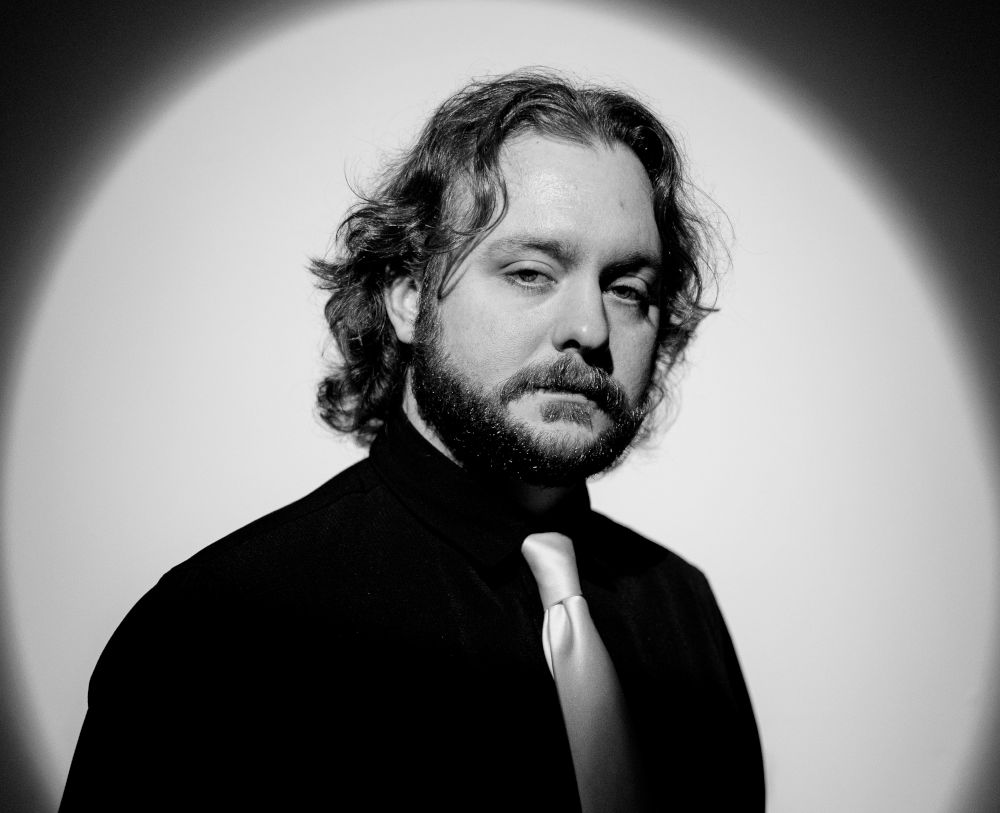
When I called him, he was preparing to play the Palomar Ballroom in Santa Cruz with a No Doubt tribute act. I asked Nathaniel what makes a tribute act commercially viable.
“You got to have an act that isn’t around anymore, and you got to have really good musicians that, you know, can play up to a very professional level.”
Welch says that people bring their own memories to the songs and the band’s faithfulness to the original recording matters. “When I saw that, the smiles and the tears of women and children and even grown men at these Valerie shows, it really hit me on an emotional level.”
His work week includes personal practice, finding venues, running rehearsals, and performing.
“I pretty much have rehearsals Monday through Thursday. Usually anywhere between one or two bands per day.”
What would he tell a young drummer who had the chops and wanted to live the life?
“I would get him into the circle of musicians that I know, and then you network,” he says. “You just have to be willing to play a lot, go out, meet people, and pretty much not have a life. All I do is work seven days a week.”
And Welch says working as late as 9:30 pm can take its toll on romantic relationships. “It’s hard being with a musician because it’s kind of narcissistic in a way. I can kind of see it, because I have to go do all this stuff and, you know, it takes a certain kind of person.”
Kayla Renelle: Twelve Musicians, One Band Fund
Kayla Renelle sings and plays rhythm guitar in the ska band Voluntary Hazing. Her own paycheck comes from public-sector communications. Can music provide a living?
“If you quantify specifically what making music means, then I would probably say yes,” she says. “Some of our guys … teach at local public schools, right? And so … music is paying their bills and then they kind of do performance ventures like this on the side for fun.”
For Voluntary Hazing, splitting a modest fee among a large ensemble presents a different calculation.

“You make 150 bucks at a bar, and you split it between 10 to 12 people. Like, what are we doing?” (laughter).
“We’re all good friends from college marching band. And we’ve gotten to a point where all the money we make, we put back into our own little band fund. We have merch, and we make money from that to cover the cost of being a band,” she says. “So, the band isn’t costing us anything, and we take that as a win.”
“We definitely get our biggest turnouts in San Jose,” she says. “We formed and have all our roots here in San Jose.”
“My job is communications and PR … I handle all of our marketing and PR stuff, and website building.”
What does she receive for all that work?
“It’s definitely the joy,” she says. “When we opened for Iration, there were a lot of families in the crowd and a lot of little girls. And it’s like these eight-year-old girls wanted pictures and wanted to talk, and then the girls were telling me how they wanted to start a band and like, I remember being that little girl, so it’s very, very fulfilling.”
Alec Adams: A Day Job to Keep the Nights Open
Later Alligator began as Adams’ pandemic bedroom-recording project. The name came from his mother’s childhood nickname for him; the solo endeavor became a shared creative enterprise. Is he making a living from music?
“Absolutely not, no, if anything, I’m probably losing money doing music. I work two jobs. I am a middle school teacher and a bartender.”
Working at night wasn’t compatible with being able to do shows. “Working a day job made it so I can just say yes to stuff.”
That availability also lets him support other musicians. “I like to volunteer. I like to go to other people’s shows in order to sort of keep the community alive,” he says. “You want to go to as many shows as you play.”
Adams receives show money and merchandise shares from four bands. But a successful evening and a sustainable livelihood are different.
“I just did a solo show in Berkeley,” he says. “It was actually a really good turnout. I got like 70 or 80 bucks for that. That covered my gas, and I had a couple free beers, and then I walked away with like 40 bucks.”
“That’s not what I would call making a living, but it’s a fun way to participate in your community, for sure.”
Touring creates another problem: Home continues charging admission while you are away. “You gotta be able to pay rent when you get in the van and go on the road. Everybody kind of has to have their own … strategy for how they’re gonna do it. I have a pension right now, health insurance, right? It’s pretty hard to get those things.”
For young musicians, he recommends understanding who might want to hear them. “If you play in an emo band, there are people who only go to emo shows. And if you play in a hardcore band, some people only want to go to hardcore shows. So you kind of need to find a way to find those people and connect with them.”
Saoirse Alesandro: The Thrill of Breaking Even
Alesandro is a vocalist, guitarist, and songwriter for the indie-punk and power-pop band Star 99. She works remotely doing newspaper layout, including for the Pajaronian in Watsonville.
“I have that job, mostly because I could do it from the road,” Alesandro says. “That is what pays my bills, is doing this layout.”
What portion of the rent comes from music? “Not much. We were happy when we started breaking even a couple years ago, which is great.”

The band has invested in a better van and maintains a rehearsal room. Alesandro estimates the room costs roughly $400 or $500 a month, shared by the band.
“I’ve never made more than $400 off of a tour,” Alesandro says. “And that was like a really good tour that was with Jeff Rosenstock. I’m not making rent off of it for sure.”
There are signs of growth. Star 99 now has a booking agent, whose regional connections extend beyond the band’s own. “They can cover stuff we don’t have connections for,” Alesandro says. “Regions like the East Coast or Asia. Or Europe.”
What would help turn San Jose music into something more sustainable? Alesandro points to accessible, affordable, all-ages venues and the planned Black Cat Licorice space opening in February in San Jose. Concert producers Heavy Lemon and the nonprofit Crossthread are taking over the space to relaunch it as an all-ages music venue, creative incubator and community hub.
“It’s run by people in the scene,” Alesandro says. “Kids will feel more welcome there. It’s not like a bar, you know, it’s an all-ages venue.”
So, can you make a living making music in San Jose? These seven musicians make me think that’s the wrong question. Maybe we should ask, “What must musicians do to keep making the music their community gathers to hear?”
For more scribblings by Richard Stockton: substack.com/@richardstockton2