
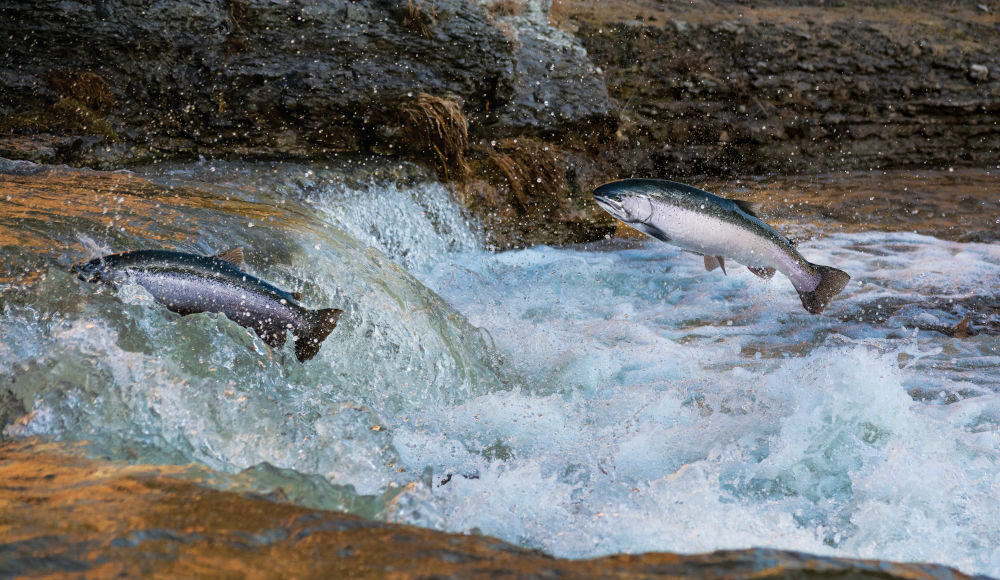
A toxic chemical from car tires is polluting rivers and creeks in along the Central Coast, threatening sensitive fish species, including endangered coho salmon. Its potential effects on human health remain under investigation.
Researchers tested 14 creeks, six roadway outfalls and two estuaries in Central California during a 2025 storm and found the contaminant, known as 6PPD-quinone, in 98% of the water samples.
The compound forms when a chemical used in tires reacts with ozone in the air. Tire particles containing the contaminant can then wash into waterways during storms.
In Santa Cruz County, 6PPD-quinone was discovered in the San Lorenzo and Pajaro Rivers and Aptos, Arana, Carbonera, Branciforte, Soquel, Trout, Wilder, Waddell, and Scott Creeks.
“This research confirms what we already knew about the presence of 6PPD-quinone in the San Lorenzo River watershed, but it also provides additional information about other local watersheds that was previously unknown,” said Chris Berry, watershed compliance manager for the City of Santa Cruz.
The research, published last month in Environmental Science & Technology Letters, found that more than three-quarters of storm samples exceeded EPA aquatic life screening values, while nearly 70% exceeded concentrations shown to be lethal to juvenile coho salmon.
Waterways located near busy highways recorded the highest concentrations among the sampled waterways designated as coho habitat.
“The fact that road surface contaminants are affecting our salmon and trout populations is not new. Toxins like copper brake dust and oils in road runoff have been a concern for years,” said Ben Harris, executive director of the Monterey Bay Salmon and Trout Project (MBSTP). “But this 6PPD-quinone study is relatively new and it’s concerning because this stuff is extremely toxic in a very low concentration.”
6PPD is a chemical commonly added to products made from plastics and rubber, such as car tires, to extend their lifespan. When car tires wear down, the 6PPD reacts with ozone in the air to create the compound 6PPD-quinone, which is significantly more toxic than the original chemical.
In 2020, Pacific Northwest researchers published a study that linked it to the decline of Puget Sound coho populations. This landmark work sparked extensive international research across environmental science, toxicology, and engineering.
Last month’s report on 6PPD-quinone levels in local watersheds is just more bad news for the Central Coast’s coho population, a species that has struggled to survive for decades.
Between the 1940s and the 1990s, coho salmon disappeared from nearly all of the roughly 17 streams they historically inhabited across Santa Cruz and San Mateo counties. By 1995, scientists counted only 50 to 60 spawning adults left in the region, almost all of them restricted to Waddell and Scott Creeks.
In addition to toxins like 6PPD-quinone, biologists attribute the local coho population’s collapse to habitat destruction, disease outbreaks, temperature extremes and environmental cataclysms like atmospheric rivers and wildfires.
Central California Coast coho salmon were federally listed as threatened in 1996 and reclassified as endangered in 2005.
While research on 6PPD-quinone’s environmental impact continues, state agencies and researchers are working on long-term solutions such as alternative tire materials, more efficient stormwater infrastructure, and better stormwater management.
According to the U.S. Tire Manufacturers Association, the tire industry is actively screening and testing dozens of potential chemical replacements that protect rubber without forming toxic quinone. They are also exploring physical or structural changes in rubber vulcanization and alternative antioxidant formulas.
In a December 2024 report, Caltrans outlined current early strategies to address 6PPD-quinone. These include stormwater monitoring programs, the management of stormwater runoff along state highways, the installation of water treatment facilities and bioswales and filtration systems, and the introduction of permeable or porous road surfaces to minimize runoff.
So is 6PPD-quinone a danger to humans? Research is ongoing.
The National Toxicology Program and the EPA are studying the chemical’s potential effects on human health. Biomonitoring studies have already detected 6PPD-quinone in human urine, blood and cerebrospinal fluid, although researchers have not established whether exposure at typical environmental levels poses a health risk.
While early laboratory tests on human cells and rodents suggest that high doses can trigger oxidative stress, inflammation, DNA damage and liver or nervous system changes, researchers have not yet established whether real-world environmental levels are high enough to cause these issues in people.