San Jose’s downtown is changing—and city leaders aren’t necessarily trying to bring back the one that existed before the pandemic.
In the heart of Silicon Valley, ground-floor retail spaces sit boarded or vacant. The San Jose Downtown Association has tracked around a dozen business closures in its service area within the past year. Office vacancies remain high, and the remote-work transformation that followed the pandemic has fundamentally changed how—and when—people use downtown.
But San Jose is betting that its future may not depend on restoring the old rhythm of office workers filling restaurants and shops at lunchtime.
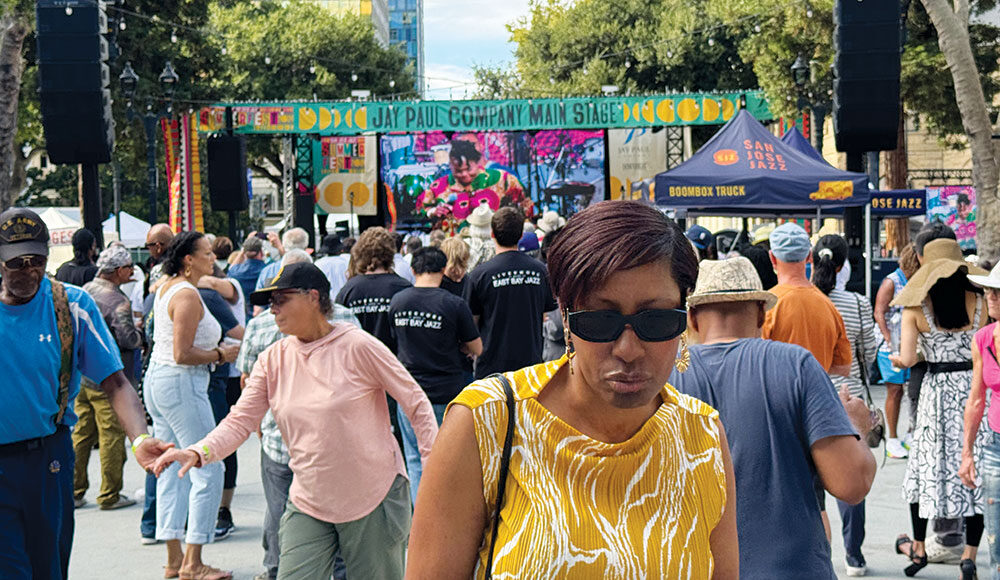
Instead, the city is leaning into what some call the “experience economy”: concerts, sporting events, nightlife and other attractions that give people a reason to come downtown.
Nate LeBlanc, economic development director for the San Jose Downtown Association, said the city is less interested in bringing back lunchtime foot traffic than in activating downtown through events. That strategy has recently been bolstered by major events including World Cup games and the Super Bowl Final, which brought significant commercial activity into the city.
With office vacancies on the rise, events of this kind are practically necessary to bring crowds in.
Longtime San Jose and San Francisco commercial real estate broker Mark Ritchie recently participated in a panel discussion about the entertainment experience economy and how it will likely affect downtowns across the country.
“Everything from closing streets, allowing free drinking and all that, which every city’s doing and it’s succeeding,” Ritchie said. “We’re going to have to replace the retail that we came to know for 100 years.”
San Jose’s challenge, however, is distinct from that of its Bay Area neighbors.
Ritchie notes that downtown San Jose is relatively small compared with the size of the city itself. San Jose is geographically the largest city in Northern California, the result, in part, of a period of rapid expansion spearheaded by city manager Anthony “Dutch” Hamann. Between 1945 and 1970, San Jose annexed 14,000 pieces of land, transforming a collection of agricultural towns into a sprawling metropolis.
In 2024, the San Francisco Bay Area Planning and Urban Research Association suggested tightening the city by promoting a “central San Jose” with downtown at its core.
Hamann aspired to become the next Los Angeles. While he succeeded transforming San Jose into a precursor to the world’s high-tech hub, the low-density city still has a way to go before its downtown rivals that of neighboring San Francisco.
San Jose is hardly alone in confronting these questions.
It’s been more than five years since the pandemic fundamentally shifted conversations surrounding downtowns across America. The urban doom loop theory—proposed in 2022 by Stijn Van Nieuwerburgh, a finance and real-estate professor at Columbia University—worked its way into the mainstream and has been hanging in the air ever since.
The doom loop begins with remote work leading to office vacancies and eventual budget deficits that leave governments unable to fund social programming—in turn pushing even more people away from downtowns.
Throughout the Bay Area, downtown areas exhibit varying degrees of occupancy and underutilized commercial space. Office vacancy rates in Oakland and Silicon Valley remain high. Berkeley has experienced a similar trend, while San Francisco’s office vacancy rate has been steadily decreasing, though it remains above pre-pandemic levels.
But is that all there is to it?
Though the pandemic and the work-from-home shift dealt a similar blow to commercial districts throughout the region, each Bay Area city faces its own concerns—and is pursuing its own strategy for revitalization.
Negative perception
Kimberley Davidson has lived in Oakland her whole life and remembers when she could spend all day and all night downtown. She says you still “can-ish,” but it’s harder, and you have to know exactly where to go.
“I’m scared for downtown sometimes,” she said.
Davidson recalls the mid-2010s and days spent around Lake Merritt that inevitably finished with a bar hop downtown.
She is currently the manager at Sobre Mesa, a cocktail bar located a block from Broadway Street. Before that, she managed Luka’s Taproom, a downtown staple until its closure in 2022 amid disputes over rent increases.
Oakland’s struggles illustrate how downtown recovery is about more than empty offices.
At a sandwich shop downtown, the owners of what they describe as the last mom-and-pop shop in the area declined to have their identities published. Keeping their frustrations with the city out of the press, one said, is part of how they have survived.
The shop sits in stark contrast to the vacant storefronts and plywood-covered buildings surrounding it.
Outside, one owner discusses the challenges of staying afloat as passersby greet her by name. If one ignored the surrounding vacancies, it might resemble the downtown Oakland of old.
According to the Tax Foundation, Oakland—along with Chicago, Long Beach and Fremont—has one of the highest state and local sales tax rates among major U.S. cities. That can drive customers away in a city already struggling with foot traffic and perceptions of violence and car break-ins. Davidson said her car was broken into eight times in one year.
Ironically, crime is down, according to Oakland Councilmember Carroll Fife, whose District Three includes downtown. City data showed a 22% decrease in violent crime from the previous year’s first-quarter analysis.
Crime is also down in San Jose, with decreases in both property and violent crime between 2024 and 2025. Yet perceptions of safety continue to shape how people use downtowns.
Leaders of nonprofit organizations dedicated to downtown revitalization across the Bay Area say perception can be as consequential as reality.
Marisa Rodriguez, CEO of San Francisco’s Union Square Alliance, said sensationalized reports of crime have made downtown San Francisco appear like a war zone, deterring tourists and even residents of surrounding neighborhoods.
Oakland has faced similar challenges. Multiple sponsors backed out of First Fridays this year following reports of violence often erroneously linked to the festival.
The way a downtown is perceived can directly affect its future. Fear can drive customers away, generating less revenue and making revitalization more difficult.
Oakland also faces a significant budget deficit. Mayor Barbara Lee’s mid-cycle budget report acknowledged the city’s financial strain as a reason it cannot fulfill some social services. The structural deficit—meaning the amount Oakland spends consistently exceeds the amount it brings in—makes it difficult for city leaders to focus exclusively on downtown revitalization.
Instead, Fife prioritizes homelessness, though she believes the issues are connected.
“Businesses who want to come into Oakland, they don’t feel like they can do business here,” she said. “So that’s probably one of the biggest hindrances. And for me, I just feel like housing is a human right, and we gotta get people indoors and everything else will fall into place.”
Empty storefronts
Empty commercial spaces are a familiar sight throughout the Bay Area.
For Berkeley Councilmember Igor Tregub, whose district includes downtown, revitalization is a priority. In late July, he recommended establishing performance standards for commercial district properties that the city manager could enforce.
Projects that fail to advance within their expected timeframe could be required to make properties presentable, creatively use ground-floor spaces or risk having permits revoked.
Empty movie theaters have become fixtures along downtown Berkeley’s avenues. Landmark’s California Theatre on Kittridge Street is among the most distinctive, its marquee combining art deco and modernist styles from various renovations dating back to its opening in 1914.
Tregub’s proposal could allow theaters and other vacant properties to be temporarily used for something other than sitting empty. One resident suggested turning them into roller rinks.
But Berkeley residents disagree over what exactly downtown needs.
Matt O’Brien, who moved to Berkeley as a student in 1984, believes the city council has shifted away from prioritizing residents and toward encouraging large developments.
On Nextdoor, Berkeley residents regularly theorize about downtown’s decline after years of losing legacy businesses such as Mel’s Diner and, more recently, Half Price Books.
Changes to Berkeley’s zoning laws allowing taller buildings have also generated significant debate. In 2023, Berkeley approved an eight-year housing plan that would allow denser development.
The approach mirrors California initiatives such as the State Density Bonus Law, which provides developers with additional density and other incentives when they include affordable housing in projects.
In April, Councilmembers Rashi Kesarwani and Tregub, along with Mayor Adena Ishii, proposed a Citywide Local Density Bonus program that would grant developers similar bonuses without requiring on-site, for-sale below-market-rate housing.
Some residents question who increased density is ultimately intended to benefit.
Dorothée Mitrani, owner of La Note, a French restaurant on Shattuck Avenue, tries not to concern herself with developers and their plans despite having shared space with them on the board of the Downtown Berkeley Association.
She said Berkeley has always experienced periods of liveliness and stagnation, but recently she has noticed more optimism.
Mitrani echoed sentiments John Craner, CEO of the Downtown Berkeley Association, shared regarding leasing negotiations involving 17 previously stalled housing projects and Flying Horse Investments’ acquisition of Shattuck Plaza.
Tregub attributes stalled projects to rising construction costs, higher interest rates, economic uncertainty, tariffs and disruptions to the supply chain.
The problems may vary from city to city, but the question remains similar: What should a downtown become when its old economic model no longer works?
For San Jose, that question may be answered less by office towers than by what happens after work—and on weekends.
A local bartender said dive bars may be recession-proof, but he does not like what has been happening to his community. It reminds him of the dot-com boom.
According to a 2009 Regional Report by the U.S. Bureau of Labor Statistics, employment in Silicon Valley high-tech industries declined by around 17%, representing the loss of more than 85,000 jobs, following the peak of the high-tech boom.
That period became known as the bursting of the dot-com bubble.
Now, some locals worry that an AI bubble could produce a similar downturn, leaving people less willing to spend money downtown.
San Jose’s response is to give people reasons to come anyway.
What’s worked
San Francisco offers one possible example.
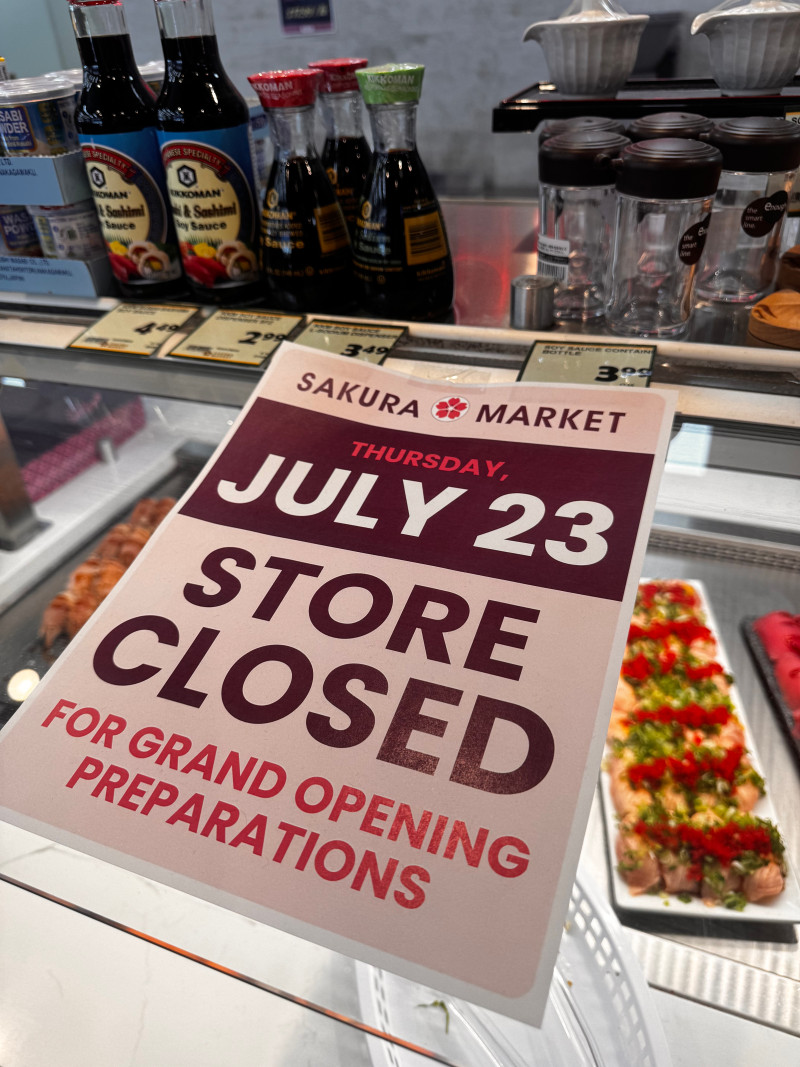
Downtown San Francisco also struggled after the pandemic, but a stroll through Union Square now feels markedly different. Foot traffic is visible even on Sunday mornings. Cafes are well patronized, plywood-covered storefronts are harder to find, and historic architecture mixes with modern retail.
Retail was—and remains—vital to downtown’s recovery, according to TJ Wenzel, managing partner at the San Francisco Downtown Development Corporation.
The nonprofit focuses on deploying catalytic capital—funding that accepts disproportionate risk in pursuit of public benefit—as a “bridge to downtown San Francisco’s vibrant future.”
In April, the DDC launched the Developed Downtown Business Fund to support businesses moving into downtown. More than 500 applicants responded.
The organization also funds projects including improvements to Powell Street and Embarcadero Plaza, deploys street-level ambassadors, supports daily power washing and invests in events such as First Thursdays to encourage foot traffic.
This year, Powell Street foot traffic is up 20%, while approximately 180,000 square feet of retail has been absorbed in Union Square.
Rodriguez said San Francisco’s convention calendar has returned to pre-pandemic levels.
She sees downtown San Francisco’s recovery as important not only to the city, but to the Bay Area as a whole.
“As the city continues to heal, you’re going to see more and more Northern Californians re-identifying with the city,” Rodriguez said. “Their city.”
Vacant to Vibrant, another program aimed at revitalization, helps small businesses navigate permitting and funding while working with property owners to create pop-ups in vacant storefronts.
The program has attracted attention from leaders in other cities, including Oakland, where officials have discussed implementing something similar.
Nan Chotiphanomvivat, manager of Powell Street’s Roxanne Cafe, has watched the downtown San Francisco she once knew slowly return during the past year.
She believes in the city and what it has offered her during the last 12 years, despite its rough patch.
“If I have to compare [it] to flowers,” she said, “it’s kinda like [it] started blooming again.”
San Jose may not be trying to bloom in exactly the same way.
Its downtown has different geography, a different history and a different relationship to the city surrounding it. Rather than simply restoring the lunchtime economy that remote work disrupted, San Jose is experimenting with what might replace it.
Events, nightlife and entertainment can bring people downtown. But the larger challenge remains: How do cities create urban centers that people want to visit regularly—not just when a major sporting event comes to town?
There may be no universal downtown recovery plan.
Across the Bay Area, cities are confronting the same post-pandemic reality from different starting points. San Francisco is investing in coordinated programs, Berkeley is grappling with vacant storefronts and development, and Oakland is attempting to overcome financial constraints and persistent perceptions of decline.
In San Jose, the future may depend on whether the city can transform downtown from a place people once visited because they had to work there into a place they choose to be.