
What happens when language is permanently fragmented without your control? How do you reconcile with finding expression in a language that excludes you in more ways than one?
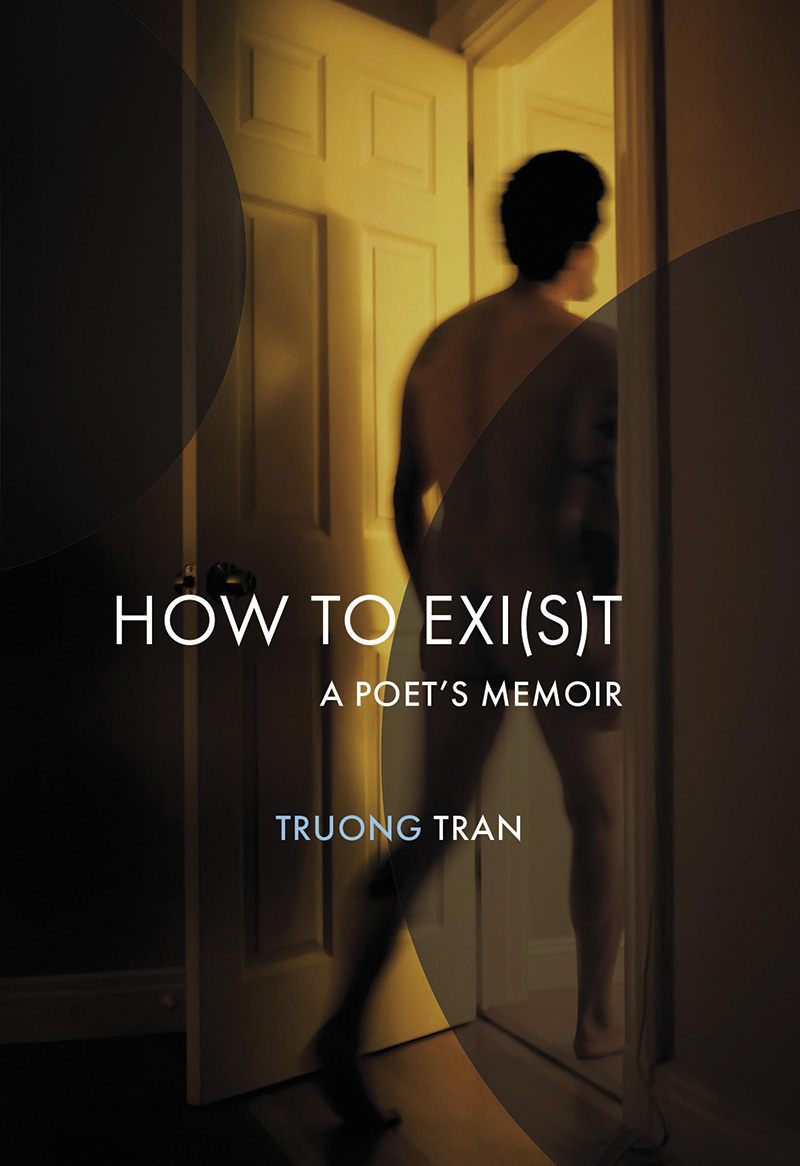
While far from a debut project, Truong Tran’s How to Exi(s)t: A Poet’s Memoir is still laden with firsts. It is the first time he has written solely in prose, and the first time he is confessing why that is. Tran uses How to Exi(s)t to open up about his dyslexia, a topic he has hitherto held close to the chest.
“How do I claim my identity as a writer when I also dread the act of reading?” he said.
This collection of essays blends personal and rhetorical interrogation with memory and anecdote, all coming together to form an abstract portrait of Tran’s life as a teacher, writer and visual artist. His identities as a dyslexic Vietnamese American queer man are foundational to understanding the words and sentences on the page. However, Tran believes the idea of compartmentalizing our existence is not innate, evident in the way he seamlessly blends examinations of these identities to create a final product that bleeds with authenticity, rather than—as he puts it—becoming a performance for the white gaze.
In one essay titled “On reading as a way of looking, seeing,” Tran begins by confessing that he does not like reading. Then we are taken back to his childhood spent in the library, where immigrant mothers like his own took advantage of the safety and supervision they provided. From here we learn Tran’s love of language came from sneakily reading about S&M in a corner: “I discovered language’s dirty little secret. It told me I was gay, again and again, and I loved it for that very reason” (Tran 122).
But the profound impact of language can cut both ways, especially when that language has been used as a tool of colonization and continues to be used in a way that grants authority to those with dominant cultural power.
“My engagement with language has always been an engagement with an exclusionary act,” said Tran. “I don’t think that literature was written for people like me so when I am reading literature, it’s an act of breaking and entering.”
His previous work, Book of the Other, which focuses on the racism that Tran has experienced in academia, is consistently mentioned throughout the memoir. This is done in both a reflective nature, and in a way that takes full advantage of the honesty and directness granted by prose.
Poetry allowed Tran to hide behind metaphor; How to Exi(s)t is a departure from that. To prove it, Tran includes an essay where a professor that he had written about in Book of the Other invites him to speak to a class, seemingly oblivious to how Tran has documented his racism in that very book. Metaphor gave him plausible deniability. While it also gave Tran the chance to hide, poetic conventions did the same for those that didn’t deserve the option. By growing to love the traditional sentence through the process of writing How to Exi(s)t, Tran is breaking free from reliance on the figurative.
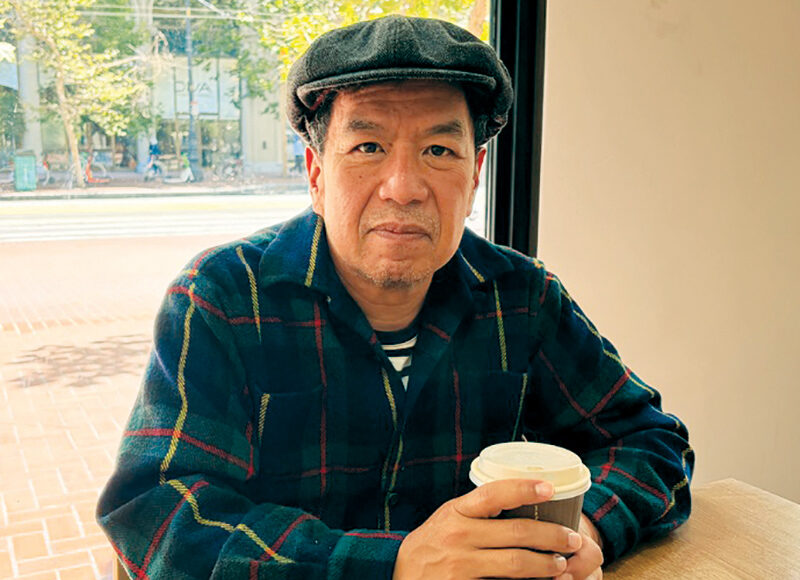
In a cafe near Embarcadero station, he explains the experience that fundamentally shifted how he views reliance on metaphor. Tran gave his students an assignment to identify what they were hunting and being hunted by. One student, a Black man who had grown up in Oakland his whole life, said that he always feels hunted by the police, that he doesn’t have the luxury of metaphor.
Tran highlights this idea in the essay, “On art and shame,” which dives into an art installation that he did using cutout images of male genitalia. He only used images of white men, and when asked why not Black or brown men, replied with some variation of, “Because I won’t fragment their images for art’s sake, in the act of cutting. We are fragmented enough” (Tran 47).
Themes of fragmentation are a throughline in many of these essays, mirroring Tran’s work as a visual artist who brings together disparate images and objects to form his pieces. For Tran, writing is as fragmented as his existence. While not always his choosing, it’s a reality he has reconciled with, in some instances through the very pages of this memoir.
Tran’s San Jose childhood is sprinkled throughout the non-chronological narrative, calling attention to formative experiences he had in what he, and other Vietnamese immigrants who settled in the area, called the “garbage neighborhood” due to being built over a municipal landfill.
“The world looking in, we would say that we were poor, we were dead poor. But from us, from where we stood and how we looked at the world, it was just full of wonder,” said Tran.
Wonder and imagination blend with the concrete hometown relationships Tran gives insight into, and how those relationships inform his work. While conceptual ruminations are a hallmark of How to Exi(s)t, Tran’s deep ties to the communities that surround him are what make these essays shine.
When remarking on students who read his work, Tran tells the story of one student who read his book on the racism encountered at his academic institution and then asked him how he breathes in a place like this. “Because it is your right to breathe,” he replied.
Tran thinks that his honesty might make his book a hard sell, not as palatable to a wide audience, but that just might be what readers can come to hope for and admire most about How to Exi(s)t.
Truong Tran’s ‘How to Exi(s)t: A Poet’s Memoir’ will be published Oct. 6 by City Lights Books.