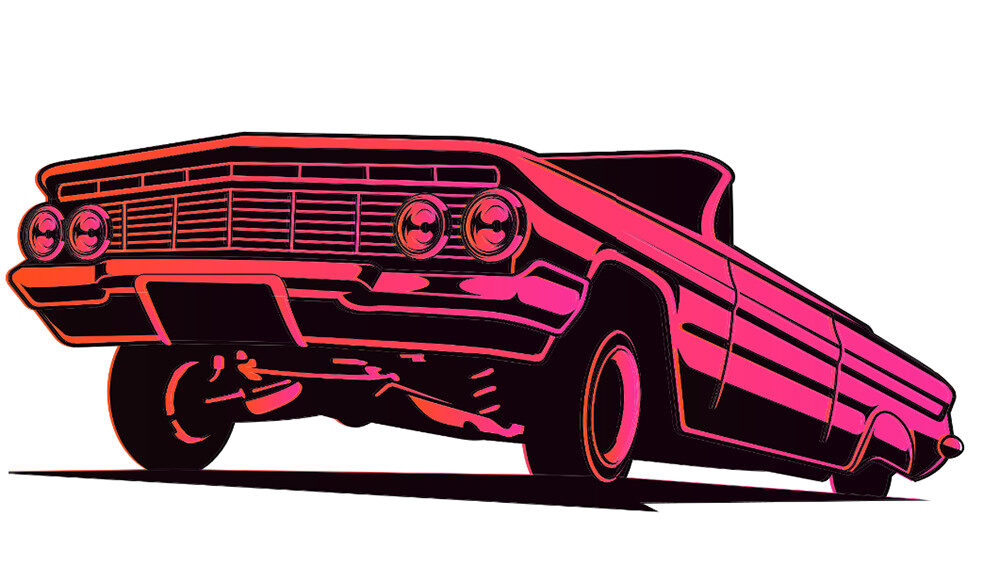
From suspension coils to lowering blocks to hydraulic presses, car customization is far more than just a hobby. Rooted in resistance, shaped by heritage and defined by custom aesthetics, lowrider culture is a testament to the resilience of marginalized communities across California.
To understand the origins of lowriding, one must first understand East Los Angeles pachuco culture of the 1940s. Pachuco is Spanish for punk, and the term came to describe Mexican-American youth who grew up out of the Great Depression. The group rebelled against white dominance, WWII-era nationalism and forced assimilation. They wore flamboyant zoot suits with exaggerated shoulder pads and feather hats.
Cars became a means for cultural expression as pachucos opted for cheap and customizable options rather than the trending hotrods of the late ‘40s and early ‘50s. They filled trunks with sandbags, rocks or bricks to bring cars lower to the road below. The DIY attitude became imperative for the future of lowriders worldwide.
Music has always stood as a crucial facet of the lowriding experience. It was never just a backdrop to the story, but a living, breathing part of the car culture and community.
Lowriders were able to transform cars into actual sound systems, and music became part of the cruising. Jazz musicians that pachucos borrowed their Zoot suit style from would inevitably influence the soundtracks of custom cars.
Soul, doo-wop and oldies grew out of the jazz genre, and its romantic lyricism, grooving melodies and buttery timbre created the perfect accompaniment to the cruising aesthetic. It’s no coincidence, either, that these genres were composed of artists from the margins of American society who used their artistry to claim their individual voices.
In the East and South Bays, lowriders forged their paths forward from the shadows of post-WW2 austerity. Cars became canvases for Mexican-American cultural identity in which craftsmanship, customization and artistic expression were means to express community values.
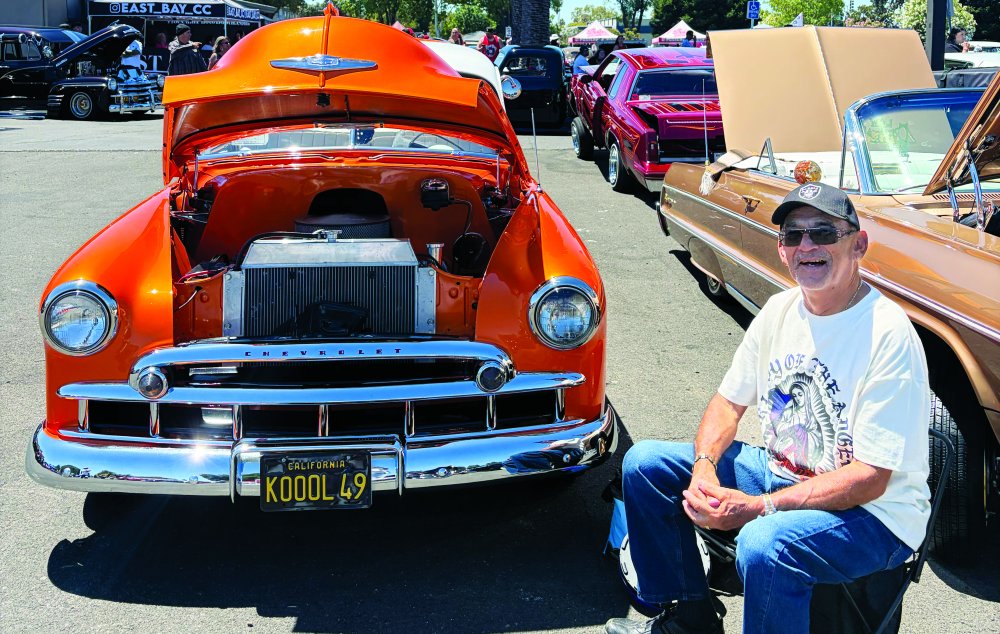
From Cadillac El Dorados to Chevy Impalas, mobile masterpieces were created. Bright, shiny colors, geometric patterns, multi-textured trims and religious imagery characterized many of the vehicles cruising through the streets of San Jose, Oakland, Fremont and beyond. Lowriding gave marginalized communities the opportunities to take up space, make themselves heard and forge their own form of identity in American culture.
California lawmakers were quick to crack down on these displays due to suppression of Chicano culture. Cruising was associated with gang violence, and public perception of lowriders was racially charged. Citing concerns about traffic, safety and crime, California enacted Vehicle Code 24008 in 1958, which made it illegal to modify any car to sit lower than the rims of its wheels.
Still, cruising persisted. By the late 1960s, lowriders began attracting attention beyond their local neighborhoods. Media attention steadily turned into a widespread fan base, and the Bay Area began to add its own unique flair to this art form. And as with any art form, lowriding was always connected to the politics of the world it inhabited.
In July 1970, Oakland’s San Antonio Park hosted the Chicano Moratorium Against the Vietnam War, a mass coalition of Mexican-American activists who argued that foreign military intervention was directly linked to Civil Rights abuses on American soil. The park quickly became a hotspot for lowrider events, as Chicano political expression paved the way for cultural and artistic expression to follow suit.
By 1977, San Jose State’s Sonny Madrid launched Lowrider Magazine, a monthly publication dedicated to Chicano fashion, culture, art and politics. Lowrider gave young Mexican-Americans an opportunity to platform and share their interests, opinions and culture with areas beyond L.A. and the Bay. The magazine spread internationally, and soon lowrider culture had an international fanbase.
In the Bay, KPFA began broadcasting “La Onda Bajita” in the late 1970s, a bilingual radio show programming lowrider classics, connecting Chicano political consciousness to American cruising history. The show still runs today, featuring a segment called “Cruzin the Compas,” including Motown, soul and classic Latin rock.
In 1975, L.A.-based funk and groove band WAR released “Low Rider,” an aptly titled anthem that helped codify and popularize existing lowrider culture into something widely recognizable.
In 1980, Zapp and Roger released “More Bounce to the Ounce,” an electro-funk boogie to the newly developed hydraulic “bouncing” mechanisms more cars began to feature. While it was technically about vivacious ladies on the dance floor, the nine-minute masterpiece builds out its groove as the song progresses, lending way to the perfect cruising sound and spectacle.
Still, California lawmakers continued to place restrictions on customizing cars. In 1982, California municipalities were allowed to enact their own cruising and vehicle height restrictions. While technically written without mention of race, many of these laws enabled targeting and harassment of Latinos. The conversation felt less about traffic safety, and more about who was allowed to occupy public spaces with bold expression.
Nevertheless, lowriders continued to circulate and gain cultural capital. Dr. Dre’s 1992 hit album The Chronic featured promotional music videos of Dr. Dre and Snoop Dogg in lowriders, and fans of the culture exist worldwide to this day.
By the ‘80s, the sound had started to change. Hip-hop began to take over the mainstream, and cars became lead characters in music videos of West Coast hip-hop. Artists like Eazy-E, Cypress Hill and Ice Cube became the face of fashion, music and aesthetics, and thrust lowriders even further into public perception. Roger White of the National Museum of African American History and Culture argues in a Smithsonian report that this allowed for lowrider culture to cross racial and regional boundaries, and welcomed African American lowriders into the scene.
“The image of lowriders coasting down L.A.’s Crenshaw Boulevard and bouncing in rhythmic unison to the bass-driven music of gangsta rap would become synonymous with the stylized presentation of West Coast, urban hip-hop culture,” White wrote in the report.
Nicholas Soto, a San Jose resident and member of the High Side Car Club, said that Hollywood portrayals sometimes hurt the image of actual lowriders.
“Hollywood always portrays lowriders as gangsters sitting with the bandana low over their eyes and everything,” said Soto. “But if you really look into it nowadays, a lot of lowriders come from everywhere. I mean, they’re business owners. The police actually have a lowrider car now… these guys are all family men with jobs, and they’re building cars. They don’t got time to be getting in trouble.”
Cruising culture declined steadily in the late ‘90s and early 2000s, but has been revitalized through radio shows, community programming, local activism and live events. The soundtrack to cruise culture is more diverse than ever, featuring all of the soul tracks, oldies and hip-hop of cruising’s history, as well as modern iterations and explorations of such genres.
San Jose, which had banned cruising since 1986, lifted the prohibition in 2022. The last “No Cruising” sign was taken down in August 2022. The city now celebrates Lowrider Day each September at City Hall with hundreds of cars on display and the display of lowriders is a feature of the city’s signature events, from San Jose Jazz’s Summer Fest to Music in the Park.
Still, it wasn’t until Jan. 1, 2024, that lowriding and cruising became completely legal across California. Assembly Bill 436 dismantled state vehicle height restrictions, and cities and counties were prohibited from enacting any new anti-lowriding laws.
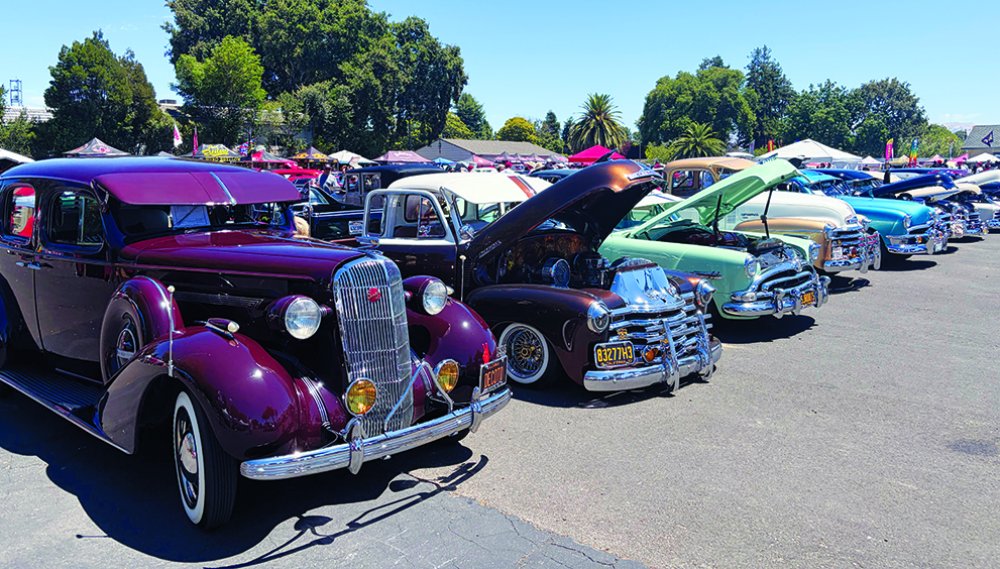
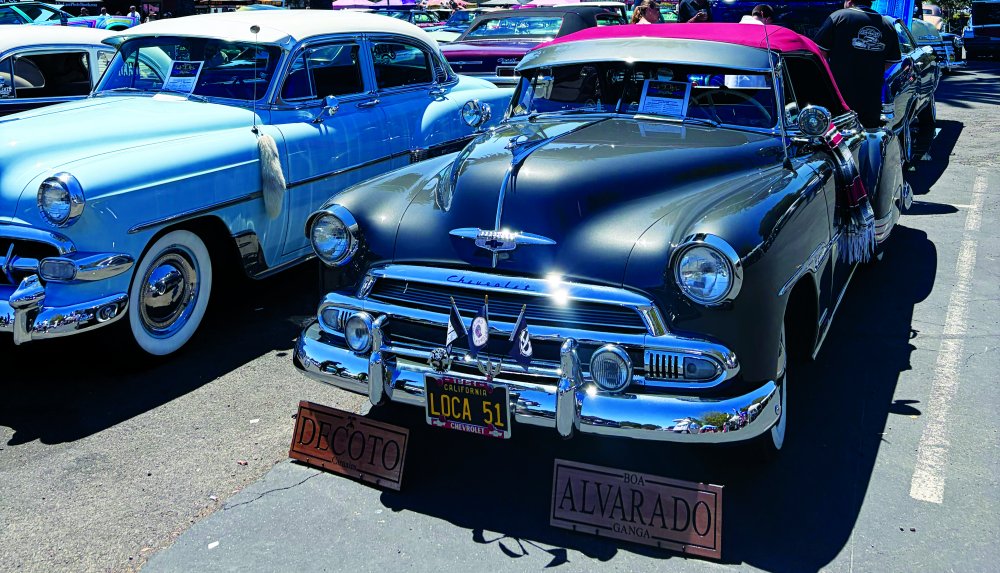
Lowrider culture and car conventions have remained cultural staples across the world, but especially in the Bay Area. Earlier in August, the East Bay Car Club hosted a car convention in Newark, complete with decked-out lowriders, live music and food vendors. The event was free and family friendly, with lowriders of all ages and backgrounds showcasing their cars.
Joseph Boxer owns the North Cal Records pop-up, and vended at the event with his daughter. They specialize in selling physical media like CDs, records and tapes consisting of old-school hip-hop, Bay area rap, funk and soul. Boxer said that physical media helps keep lowrider culture alive, as music helps draw young people into the history and significance of cruising.
Nick Ramirez, a 76-year-old East Bay native, said that the culture of pride in lowriding has contributed to its persistence to this day. In the wake of ICE raids targeting Hispanic communities, he feels it’s as important today as it was in the ‘40s to celebrate Chicano culture and heritage.
“[Cruising] is not a fad, it’s here to stay,” said Ramirez. “Especially here in the Bay Area, with what’s going on with ICE and all that. It’s sad, but it’s really nice to see that people in this area are not afraid and will not be intimidated by ICE.”
Lily and David Ortiz, supporters of the East Bay Car Club and proud owners of a 1950 Buick Roadmaster Sedan, said that lowrider events are opportunities for peaceful gatherings of all kinds of people.
“We got our white lowriders, we got our Asian lowriders, we got our Pacific Islander lowriders,” said David. “We have a Latino culture too, right? And when we all come together and recognize each other, this is the same cause.”
Enjoy the specially curated “Low ‘N Slow” mixtape on Spotify.